Building your own watch habit: fifteen minutes a week
What you will learn
- A simple 15-minute weekly routine that needs no money
- Why a small watch list beats a big one
- How to keep a notebook that actually teaches you
- The rules that keep the habit honest
You do not need to follow the market ball by ball. Think of this like checking cricket scores once a week, or keeping a pocket-money diary: five calm minutes of noting things down teaches you more than hours of worrying. Here is a routine small enough to survive even exam season.
The weekly fifteen minutes
Pick one fixed time. Sunday evening works well.
First five minutes: the tracker feed. Open the Smart Investor Tracker and scan the newest items. Anything from the funds, activists, or insiders you have learned about in this module?
Second five minutes: EDGAR. Open EDGAR’s full-text search and type the names of your companies, one at a time, newest filings first. You are only checking: did anything new appear?
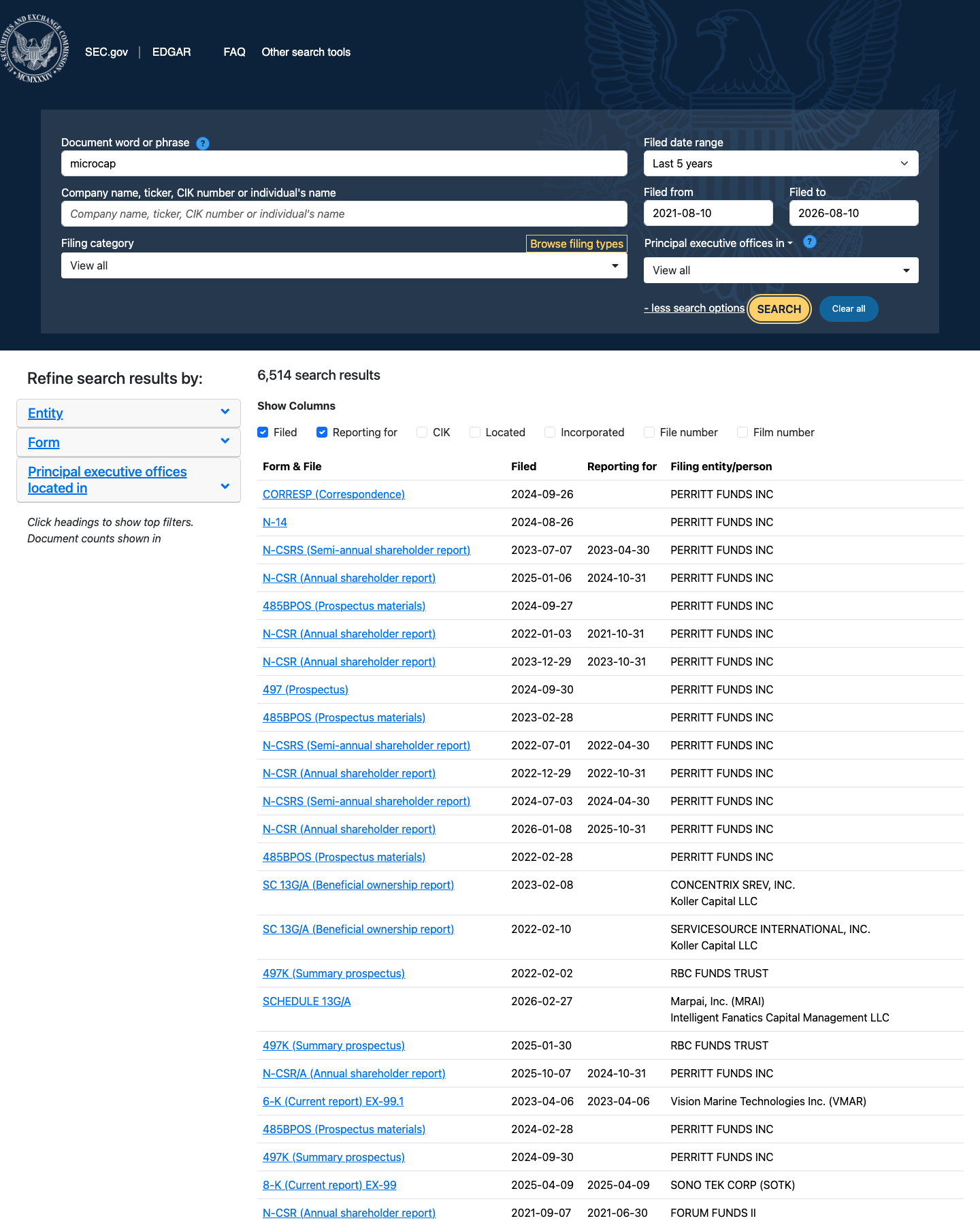
This simple search box is your second five minutes each week.
Last five minutes: your notebook. Write the date, what changed, and one question for next week. Three lines. That is all. And if nothing changed, write “nothing new”. A quiet week is also an answer, and writing it down keeps the habit alive.
The rules that make it work
Keep the list small. Five to ten companies you genuinely understand. Maybe Apple, because you know the iPhone, or Microsoft, because you have used Windows, or Coca-Cola, because you can explain its business in one sentence. A small list you actually read beats a long list you skim.
Source first. Summaries anywhere on the internet come second. The filing comes first.
Remember the calendar. A 13F you read today is up to 45 days old. A Form 4 is two days fresh. A new 13D means a story is starting. Freshness changes what a filing means.
One signal never decides anything. An insider buy, plus a fund adding, plus a business you understand is still only the start of research, not the end. And this habit is for learning. If real money is ever involved, that is a separate, slower decision, made with grown-ups and far more homework.
A worked example: one Sunday
Your notebook might read: “12 May. Apple: a famous fund trimmed its position (13F, so 45 days old). New Apple 8-K on EDGAR, skimmed it. Question: did the fund trim again next quarter?” That entry took minutes. But after three months of Sundays, your notebook shows patterns no single filing can: the same fund trimming twice, an insider buying again. Once a month, reread your old entries before you write a new one. That is when the habit starts paying you back in understanding.
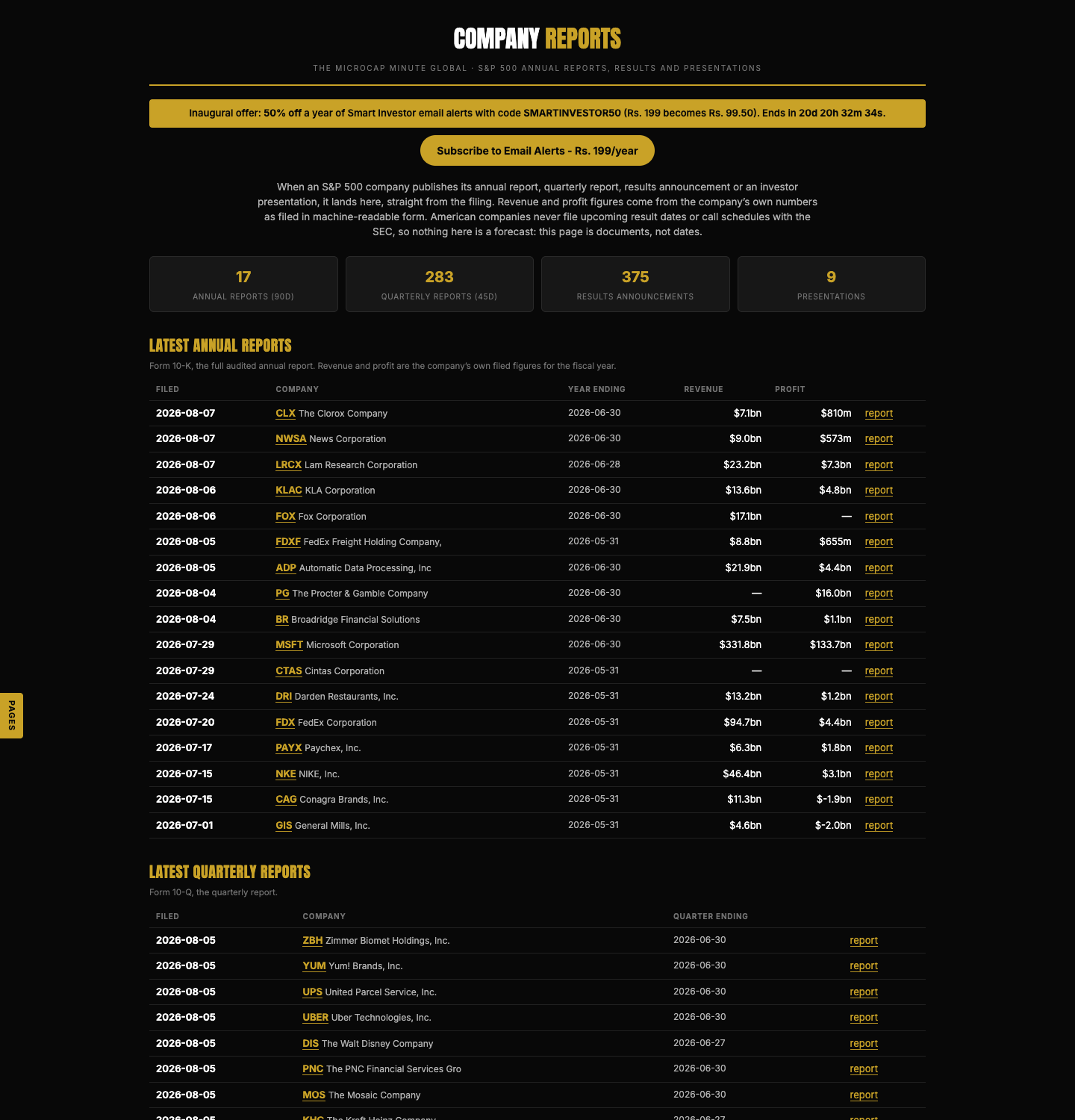
The tracker’s reports page is good Sunday reading when you have three extra minutes.
Try it yourself
Do the full routine today, not someday. Tracker feed, five minutes. EDGAR search for one company, five minutes. Then your first notebook entry with today’s date, five minutes. Set a reminder for the same time next week. The habit only counts if it repeats.
Key takeaways
- Fifteen minutes a week, at a fixed time, beats two hours once in a while.
- Watch five to ten companies you understand. Ignore the rest.
- Notebook rule: date, what changed, one question.
- Signals only start research; they never finish it.
Read one real thing: Apple’s filing list on EDGAR. Notice how many different form types one company produces in a single year.
Listen to this chapter
Read by Ritu, a synthetic voice from Sarvam AI