The government notebook: why American companies must confess
What you will learn
- What the SEC is and why America created it
- What a filing is, in one sentence
- What EDGAR is and why it matters to you
- Why the biggest companies on earth must confess in public, on a schedule
Imagine your school had a strange rule. Every student must pin their real report card on the school notice board. Not the version they show their friends. The real one, signed by the class teacher, with every subject mark. Anyone can walk up and read it: classmates, parents, even students from another school. No permission needed, no fees.
America’s stock market runs on exactly this rule, and it is the reason this entire course is possible.
The crash that started it all
In 1929, the American stock market crashed spectacularly. In the years before the crash, companies could say almost anything to people buying their shares (a share is a tiny piece of ownership in a company). Many exaggerated. Some hid losses the way a child hides a broken toy behind the sofa. When the truth came out, millions of ordinary families lost their savings, and trust in markets collapsed.
So the US government created a referee: the Securities and Exchange Commission, or SEC, a government agency whose job is to make sure companies tell investors the truth. (An investor is anyone who puts money into shares hoping they grow.) The SEC was born in 1934, and its basic deal with companies has not changed since: you may sell shares to the public, but in return you must keep confessing, in writing, on a schedule, for as long as you want the public’s money.
A company that has made this deal is called a public company: one whose shares any member of the public can buy. Apple, Microsoft, Coca-Cola, Nvidia and Tesla are all public companies, so all of them must keep confessing.
The notebook where the confessions live
Each document a company sends to the SEC is called a filing: an official, signed document that becomes public the moment it arrives. And where do all the filings go? Into EDGAR, which stands for Electronic Data Gathering, Analysis and Retrieval. EDGAR is the SEC’s free public website that stores every filing from every public company in America. Think of it as the government’s notebook, left open on a table for the whole world.
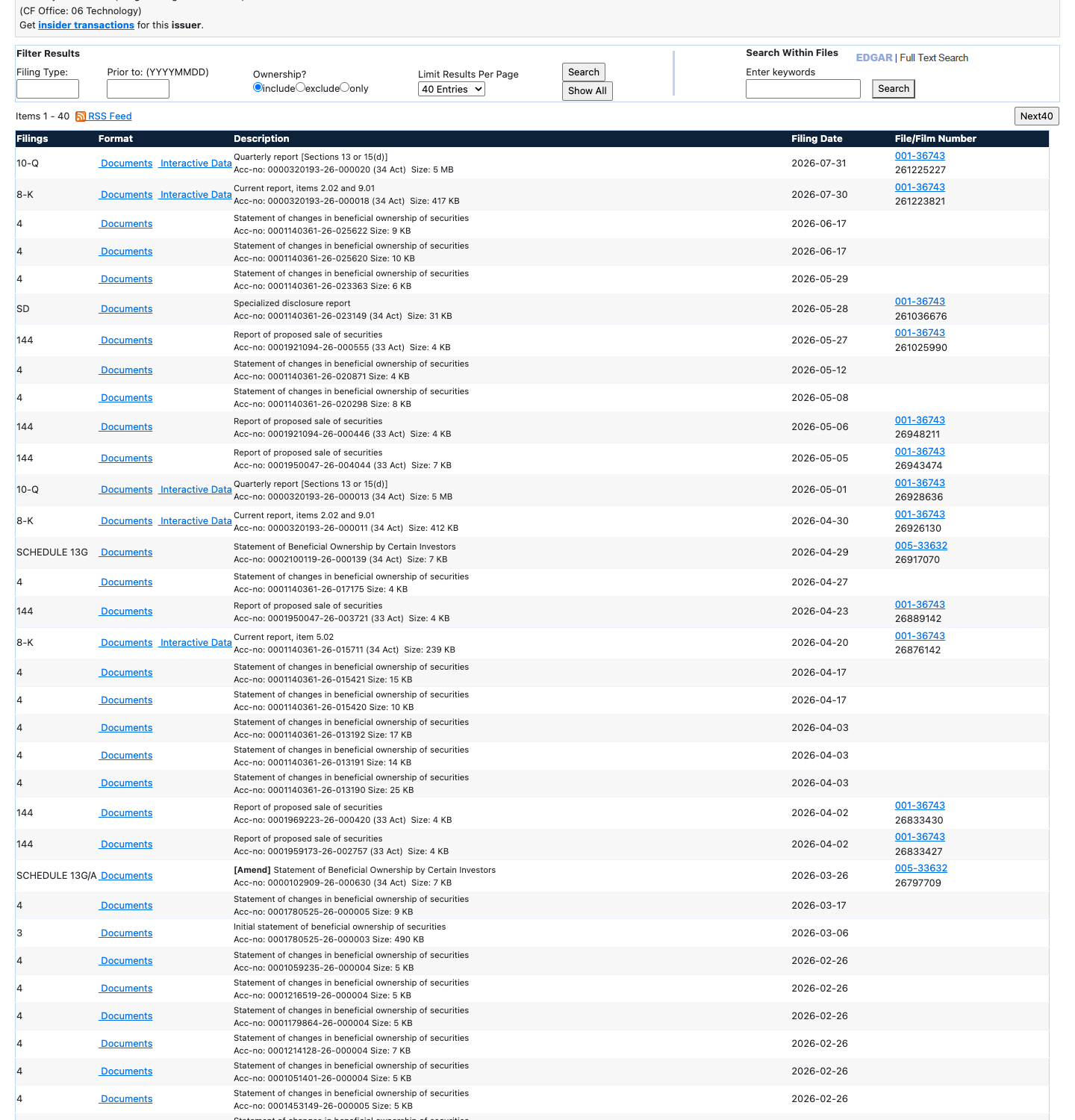
This is Apple’s page on EDGAR: notice the rows and rows of official documents, each with a date and a form type, all free to open.
Here is the remarkable part. Apple sells roughly $400 billion of iPhones, Macs and services a year (about Rs 34 lakh crore), one of the biggest businesses on earth. And yet a student in Kochi or Kanpur can open the same page, read the same documents, at the same moment as a banker in New York. No account. No payment. No permission.
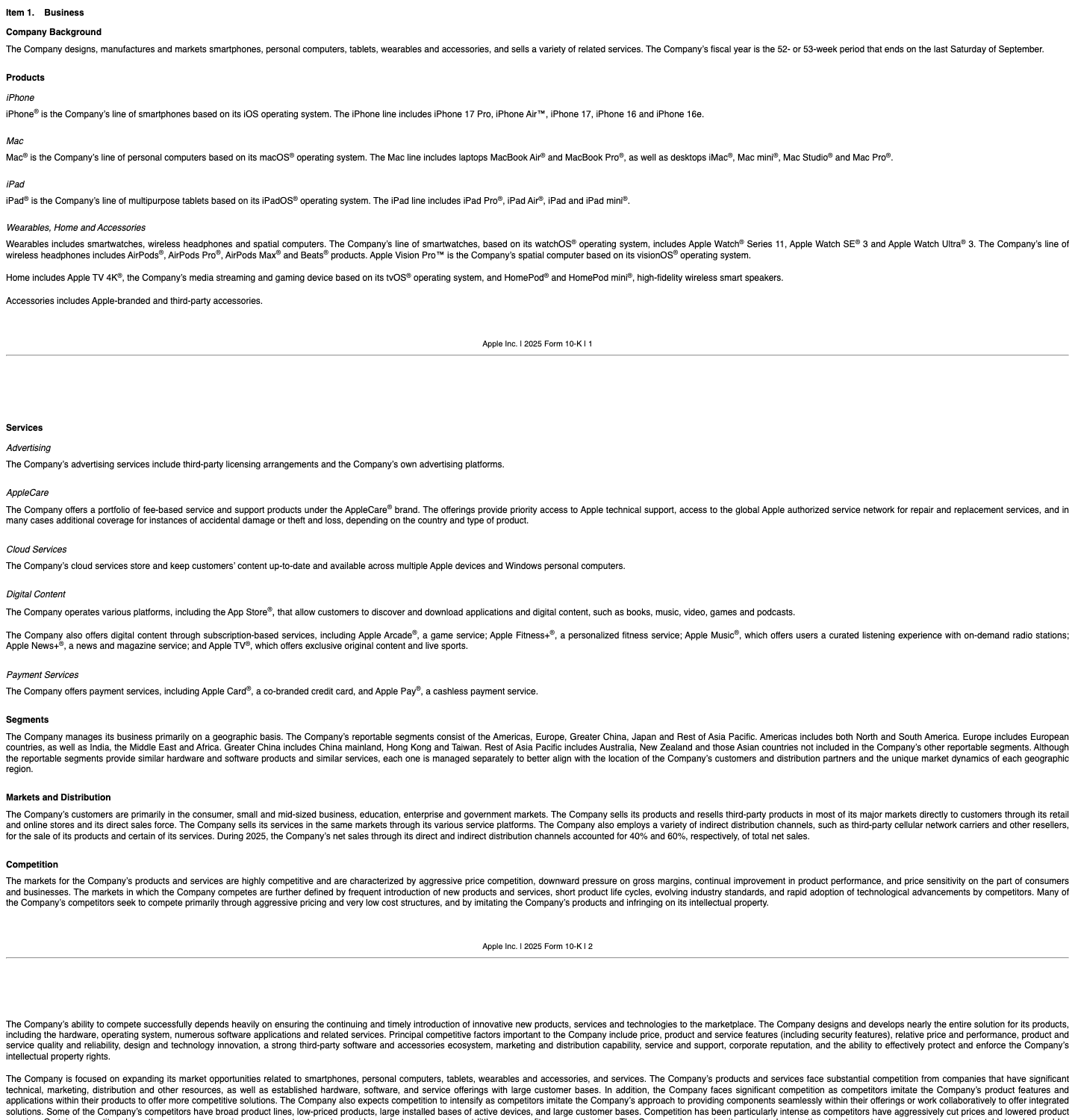
Inside one of those filings: notice that this is Apple describing its own business in its own words, not a journalist’s summary.
If you know Indian markets, this will feel familiar. In India, companies send disclosures to SEBI and the stock exchanges. EDGAR is the American version of that idea, with one big difference: everything sits in one place, in the open, decades deep.
One honest warning. Filings are written by company lawyers, and they can be long and dry. Nobody at the SEC makes them fun. But boring is not the same as useless: a filing is the one version of the story the company is legally forced to stand behind. In the coming chapters you will learn which pages matter, so you never have to read all of them.
Try it yourself
Open sec.gov, find the company filings search, and type “Apple”. On Apple’s EDGAR page, answer two questions: how many filings has Apple made this year, and what is the newest one about? Ten minutes, no login, free.
Key takeaways
- The SEC is the US government’s market referee, created in 1934 after the great crash of 1929.
- A filing is an official, signed document a company must send to the SEC, and it becomes public instantly.
- EDGAR is the free government website storing every filing from every US public company.
- You can read the exact same documents as a Wall Street professional, at the same time, for free.
Read one real thing
Apple’s own page on EDGAR. Notice the dates in the left column: the confessions never stop, all year, every year.
Watch this chapter
The video edition, on our YouTube channel
Listen to this chapter
Read by Ritu, a synthetic voice from Sarvam AI