The family of forms in one line each
What you will learn
- The seven form types that cover most of what companies file
- The one question each form answers
- How these forms rhythm through one year of Apple’s life
Think of a big school. It sends home different papers for different reasons: the annual report card, the unit test marks, a circular when something sudden happens, the annual day invitation telling you who is on stage and what was decided. America gives every public company a similar family of forms. Each form is a different kind of letter, written for a different reason, on a different schedule. Learn just seven of them and you can follow almost any company on earth.
Here is the whole family, one line each:
- 10-K: the annual report, the full story of one business year, checked by outside accountants.
- 10-Q: the quarterly report, a shorter update every three months, not fully checked.
- 8-K: the breaking news bulletin, filed within days when something big happens.
- DEF 14A: the proxy statement, the invitation to the yearly shareholder meeting, which reveals what the bosses get paid. (A shareholder is anyone who owns shares in the company.)
- Form 4: the insider trade note, filed when a company’s own bosses, directors or owners of over 10 percent buy or sell its shares.
- 13F: the big fund’s shopping list, showing what giant money managers own.
- 13D: the “I bought a big chunk” declaration, filed when someone buys over 5 percent of a company and wants a say in running it.
Now watch the family at work through one year of Apple’s life.
Apple’s business year ends in late September. About a month later comes the 10-K: hundreds of pages covering what Apple sells, what could go wrong, and the full money statements. It is audited, which means an independent outside accountant has checked the numbers and signed off on them. The table of contents alone tells you how a giant company thinks about itself.
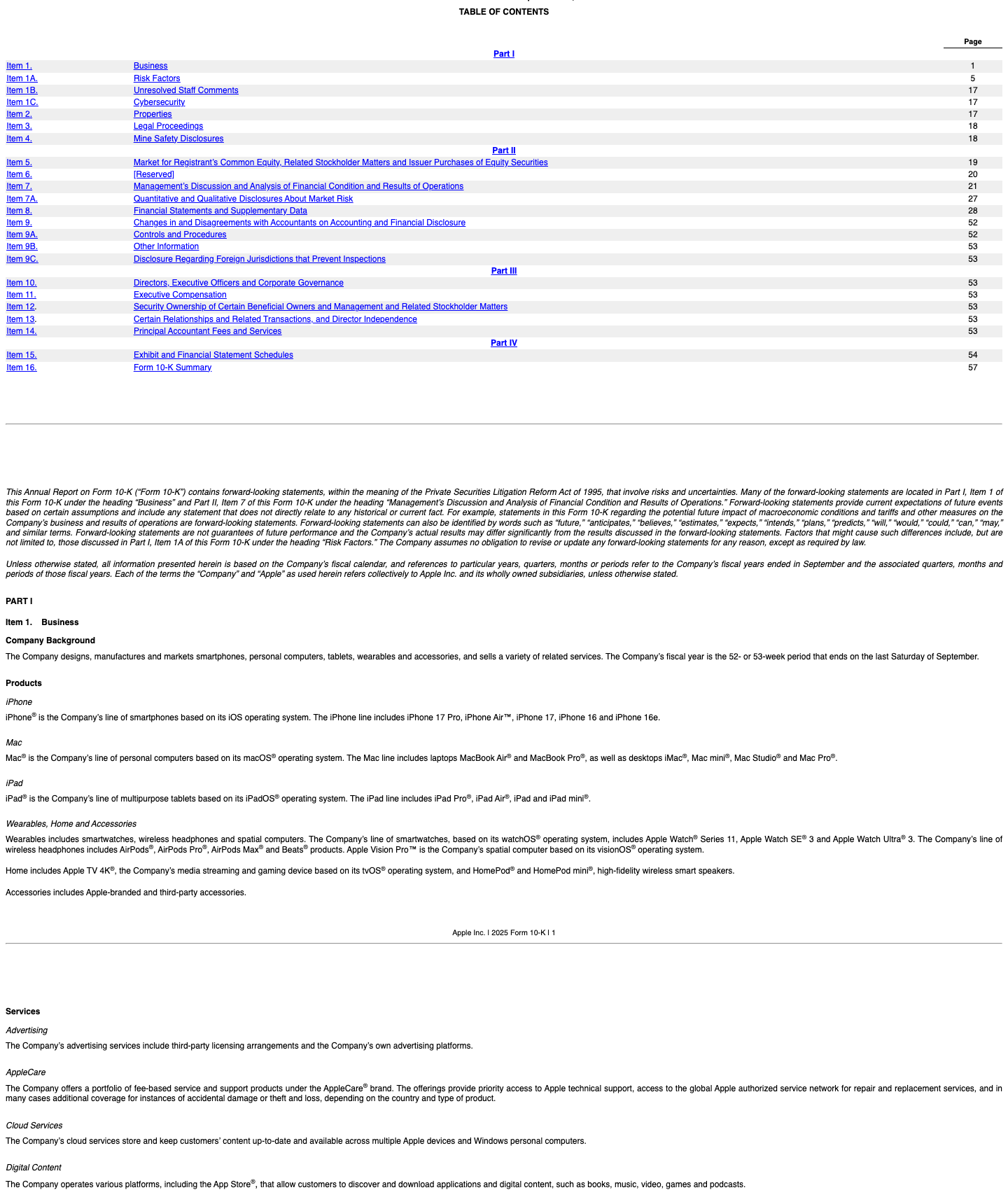
Notice how the 10-K is organised into numbered Items: Item 1 is the business, Item 1A is the risks, Item 7 is management discussing the year.
Three times a year, Apple files a 10-Q with fresher, shorter numbers. Whenever something big happens, like results day or a sudden leadership change, an 8-K appears within four business days.
Then, before its yearly shareholder meeting, Apple files the DEF 14A. This is where you learn who sits on the board and what the top bosses earned. For Apple’s boss, the figure has been tens of millions of dollars a year (hundreds of crore rupees). Every rupee of it, public.
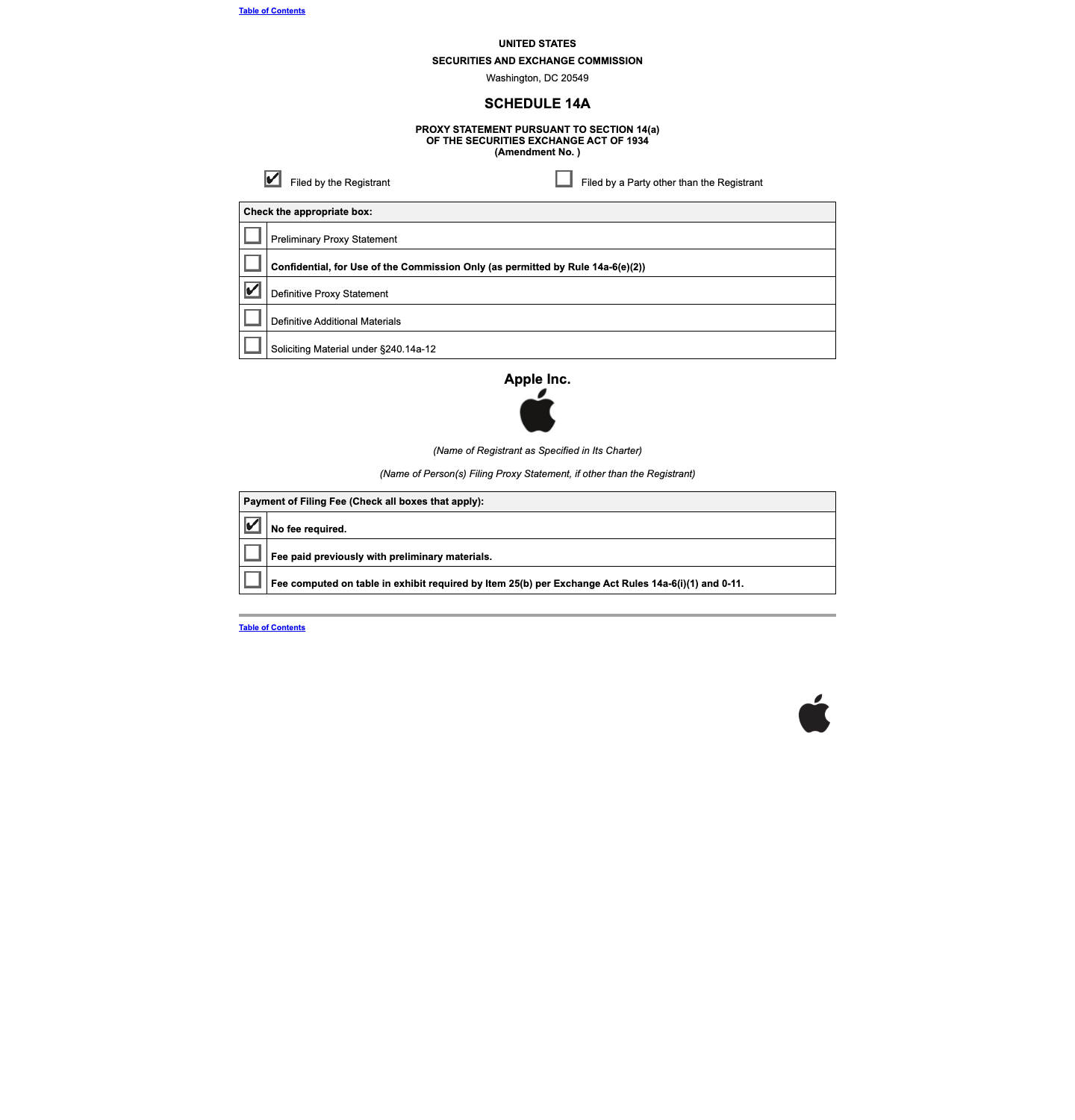
Notice what the proxy puts in the open: pay, directors and the questions shareholders will vote on.
When Apple executives sell some of their own Apple shares, a Form 4 appears within two business days, naming the person, the date, the price and how much they still own.
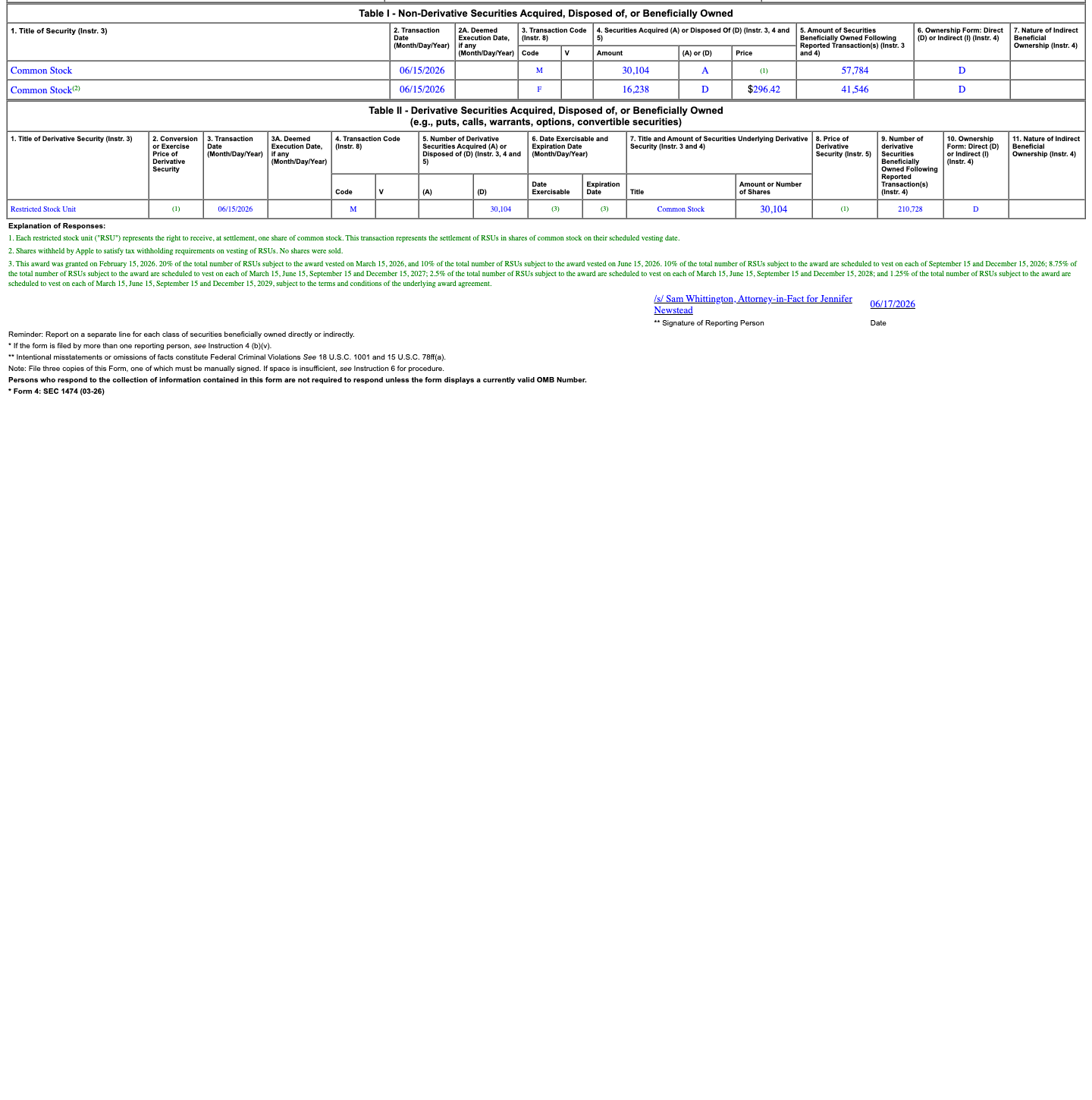
Notice the transaction table: who traded, when, how many shares, and at what price.
The last two forms are about the buyers, not the company. Every three months, giant investors file a 13F listing what they hold. And anyone who crosses 5 percent ownership of a company, say Tesla or Nvidia, with plans to push for change must file a 13D and announce it to the world. Some big owners stay quiet, just along for the ride; they file a softer cousin called the 13G instead. Watch for the switch: a 13G turning into a 13D means a quiet owner has decided to get pushy.
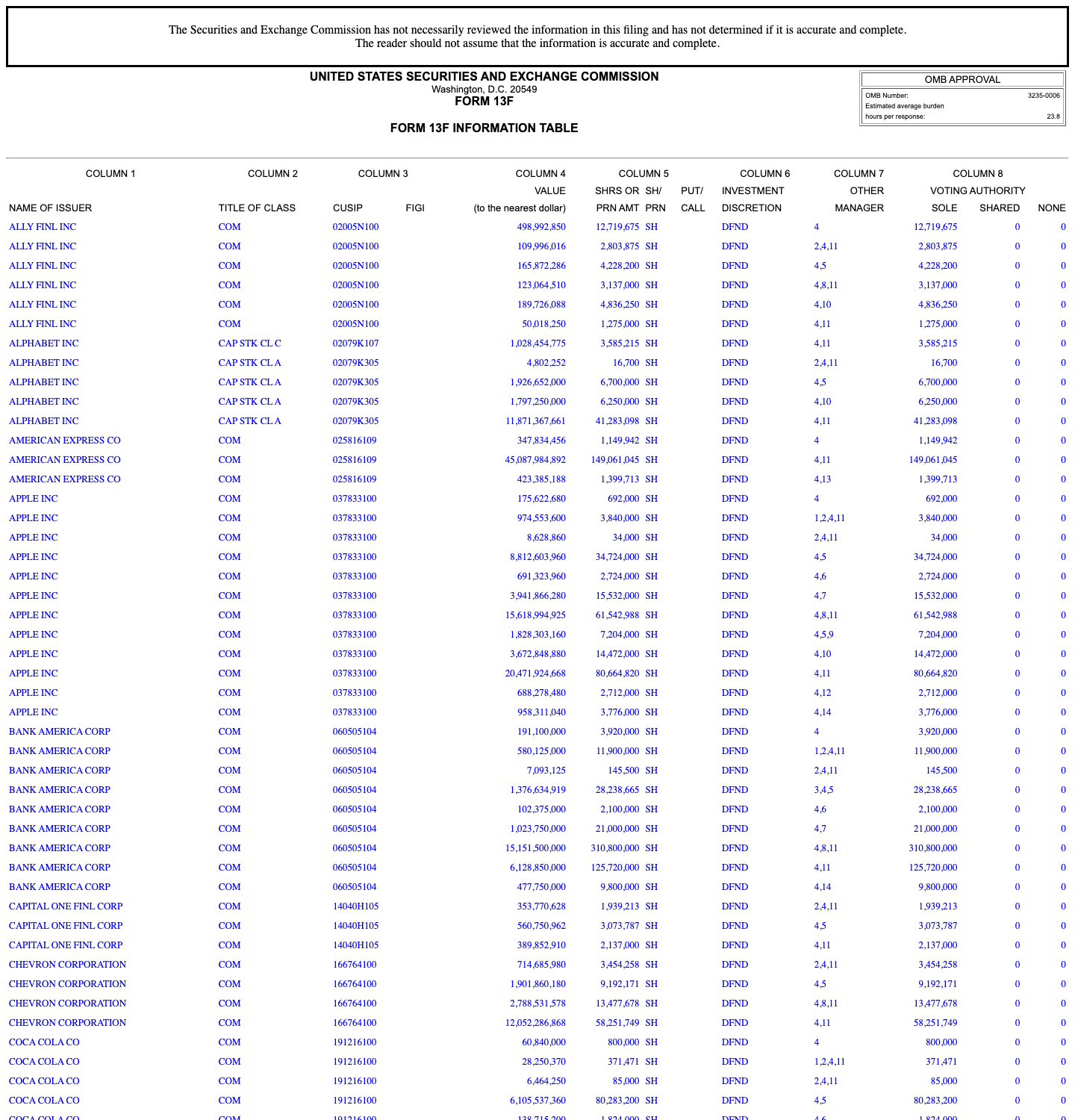
Notice the columns: company name on the left, then the value and number of shares, a rare peek inside a famous fund’s cupboard.
Try it yourself
On Apple’s EDGAR page, use the filter box to show only 8-K filings. Open the newest one and find its Item number: that number tells you what kind of news it is. Then filter for 10-Q and note which quarter the newest one covers.
Key takeaways
- Seven form types explain most of what you will ever see on EDGAR.
- The 10-K is the deep yearly story, the 10-Q the quarterly check-in, the 8-K the urgent bulletin.
- The DEF 14A reveals pay and directors, Form 4 reveals insider trades, the 13F reveals what big funds own, the 13D and its quiet cousin the 13G reveal big owners.
- Pick the form by the question you have, and EDGAR stops being a maze.
Read one real thing
Apple’s 10-K filings on EDGAR. Notice how the dates repeat like clockwork every autumn: that rhythm is the law, not a habit.
Watch this chapter
The video edition, on our YouTube channel
Listen to this chapter
Read by Ritu, a synthetic voice from Sarvam AI