Deadlines that protect you: who files what and when
What you will learn
- The filing deadlines that matter most, from 2 business days to 45 days
- Why speed protects small investors like you
- How to check with your own eyes whether a filer kept the clock
In school, homework has a due date for a reason. Without one, a lazy student could wait, peek at everyone else’s marks, and then decide whether to submit at all. Markets have the same problem. A company boss who knows bad news before anyone else could quietly sell shares for months while you keep buying in the dark. The SEC’s answer is not just “tell us what happened”. It is “tell us by this day”.
Here are the clocks that matter, fastest first:
- Form 4, insider trades: 2 business days. The fastest clock in the system. (Business days are working days, skipping weekends and holidays.) When an Apple executive sells shares on Monday, you know by Wednesday.
- 8-K, big events: 4 business days for most events. A fired boss, a giant signed deal, a sudden factory problem: the world hears within a week.
- 10-Q, quarterly report: about 40 days after the quarter ends for big companies, 45 for smaller ones.
- 10-K, annual report: 60 days after the year ends for the biggest companies, up to 90 for smaller ones.
- DEF 14A, the meeting invitation: no fixed day count, but it must reach shareholders before they vote, so it appears some weeks before the yearly meeting.
- 13D, the big chunk declaration: 5 business days after someone crosses 5 percent ownership, and 2 business days to amend it when plans change, say from quiet holder to demanding board seats.
- 13F, fund portfolios: 45 days after each quarter ends. (A portfolio is simply the collection of investments a fund owns.) This is the slowest clock here, and yes, it frustrates everyone: you are seeing a fund’s shopping list weeks after the shopping happened. Useful, but never fresh. Remember that before copying any famous investor’s list.
And if a company misses its clock? It cannot just go quiet: it must file a late notice named NT, like NT 10-K, confessing the delay. That confession is a warning light: late filings often come before accounting trouble, so pay attention when you spot one.
Why does this protect you? In the 1920s, before these rules, insiders could trade on secret news for months. Deadlines make hiding expensive: the insider must confess almost immediately, while the news is still warm. You, a student in India, learn about the trade at nearly the same moment as a professional in New York. Nearly, because professionals have faster machines. But the document itself is identical for both of you.
Follow one trade
Say a Tesla director sells some shares on a Tuesday. By Thursday night, a Form 4 sits on EDGAR.
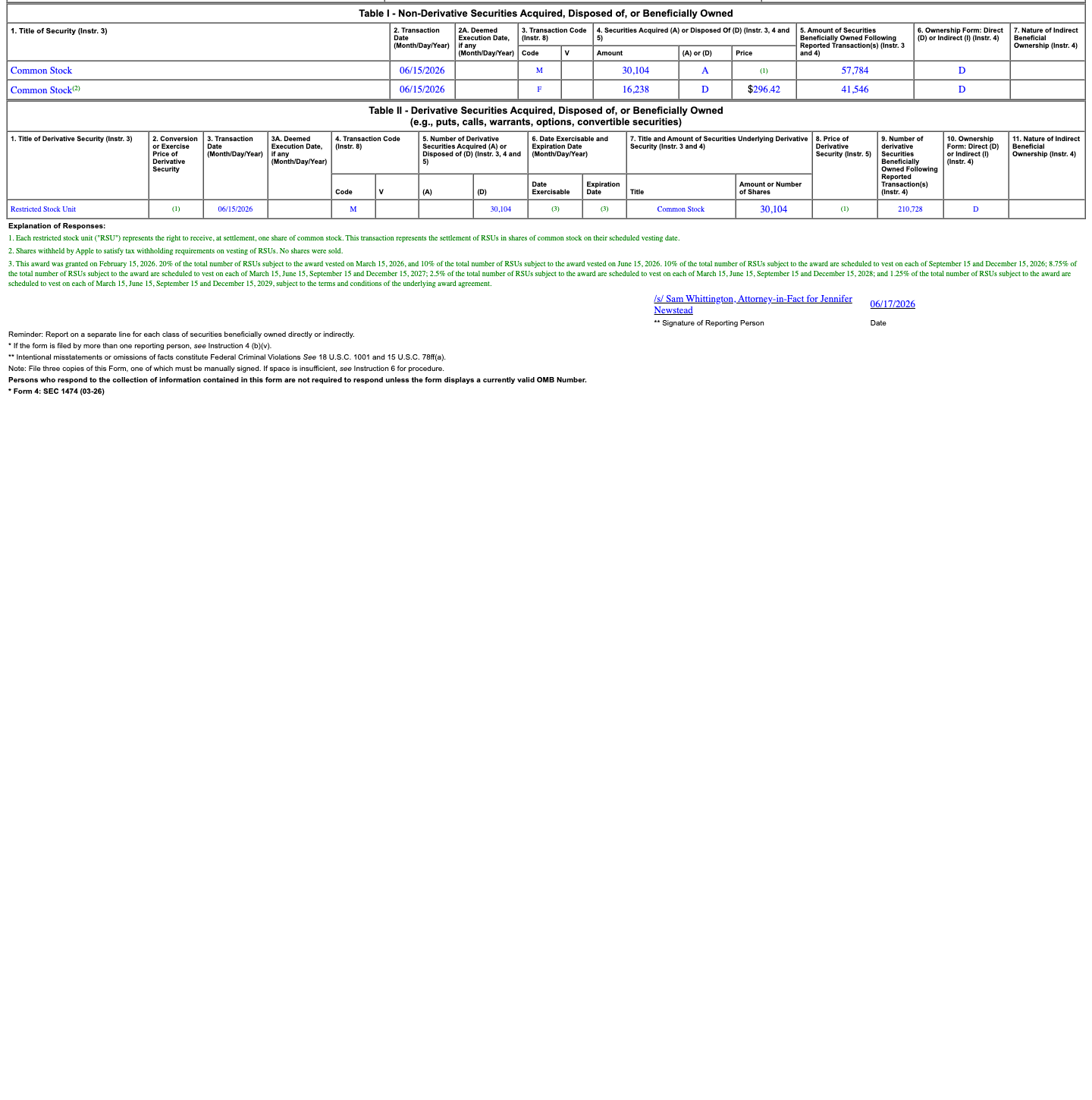
Notice what the form shows: the exact date of the trade, the number of shares, the price, and what the insider still owns afterwards.
Now compare the filing date at the top with the trade date inside. You will rarely find a gap of more than two business days. The clock is real, and you can check it yourself.
The same clockwork governs the giants. Berkshire Hathaway, the firm of Warren Buffett, the most watched investor alive, must file its 13F within 45 days of each quarter’s end.
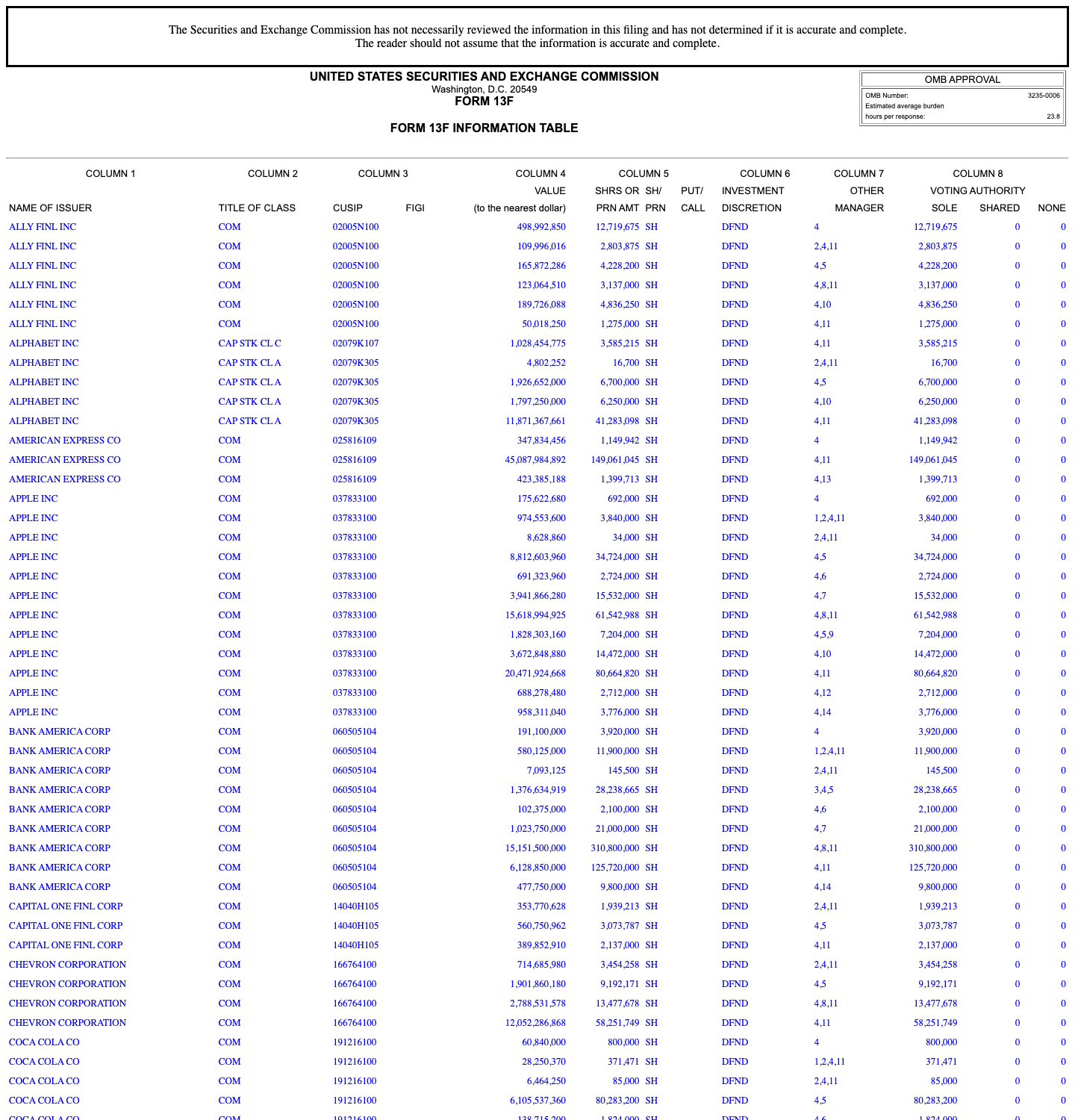
Notice that this is the same public page every finance writer on earth reads the evening it appears: nobody gets it early.
And when something big happens at Nvidia or Coca-Cola, a leadership exit, a signed deal, the 8-K lands within four business days.
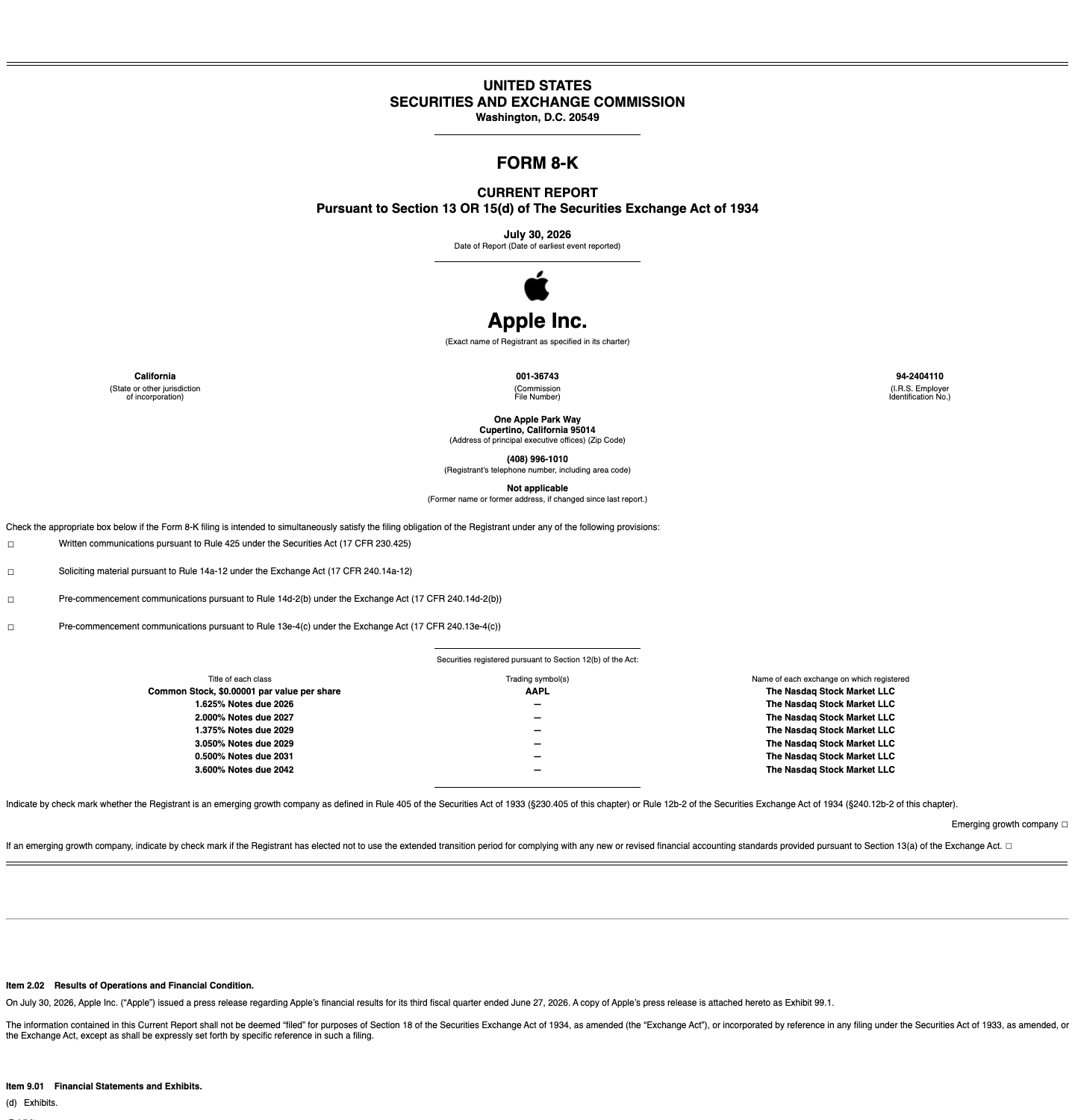
Notice the item numbers: they are the form’s way of saying exactly what kind of event this is.
Try it yourself
Find Microsoft’s newest Form 4 on EDGAR: search “Microsoft”, then filter the filings list to form type “4”. Open the newest one and compare the trade date inside with the filing date at the top. How many business days passed? Repeat for Coca-Cola and see if the clock holds.
Key takeaways
- Insider trades go public within 2 business days; big events within 4.
- Quarterly and yearly reports run on 40 to 90 day clocks, depending on company size.
- The 13F arrives 45 days late: a map of where a fund was, not where it is.
- Deadlines exist so insiders cannot quietly use news before you see it, and you can verify them yourself.
Read one real thing
Apple’s Form 4 filings on EDGAR. Open any one and compare the trade date with the filing date: you will see the 2 day rule working with your own eyes.
Watch this chapter
The video edition, on our YouTube channel
Listen to this chapter
Read by Ritu, a synthetic voice from Sarvam AI