Filings vs news: why the filing always wins
What you will learn
- Why a filing beats a headline whenever the two disagree
- The three things that make a filing legally special
- How to trace any big news story back to its filing in minutes
Suppose a WhatsApp forward claims your school exam has been moved to next month. It spreads fast. Half the class believes it. Then you walk to the notice board and read the circular signed by the principal: the exam is on Thursday, as always. When the forward and the signed notice disagree, which one wins?
Markets have the same two channels. News is the forward: fast, loud, written to spread. A filing is the signed notice: slower, drier, and binding. Your job as a reader of companies is to know which channel to trust when they tell different stories.
What makes a filing different
Three things.
First, a filing is written and signed by the company itself, and its top bosses must certify that it is honest. Lying in a filing is a crime, not an embarrassment. A journalist who gets a story wrong risks a correction; a company that lies to the SEC risks court.
Second, the wording is exact. If the filing says revenue fell 4 percent, it fell 4 percent. Not “plunged”, not “crashed”, not “soared”. Adjectives are how stories sell; numbers are how companies confess.
Third, a filing is timestamped and permanent. It sits on EDGAR unchanged. If the company must fix something, it cannot quietly edit the old document; it files an amendment, a corrected version marked with “/A”, that everyone can see. A wrong headline, by contrast, is usually repaired by a small correction that few readers ever notice.
Earnings night, in slow motion
Four times a year, Apple reports its results after the New York market closes. The official event is not a tweet or a TV segment. It is an 8-K filing carrying item number 2.02, “results of operations”, with the company’s press release attached as Exhibit 99.1 (an exhibit is simply an attachment to a filing).
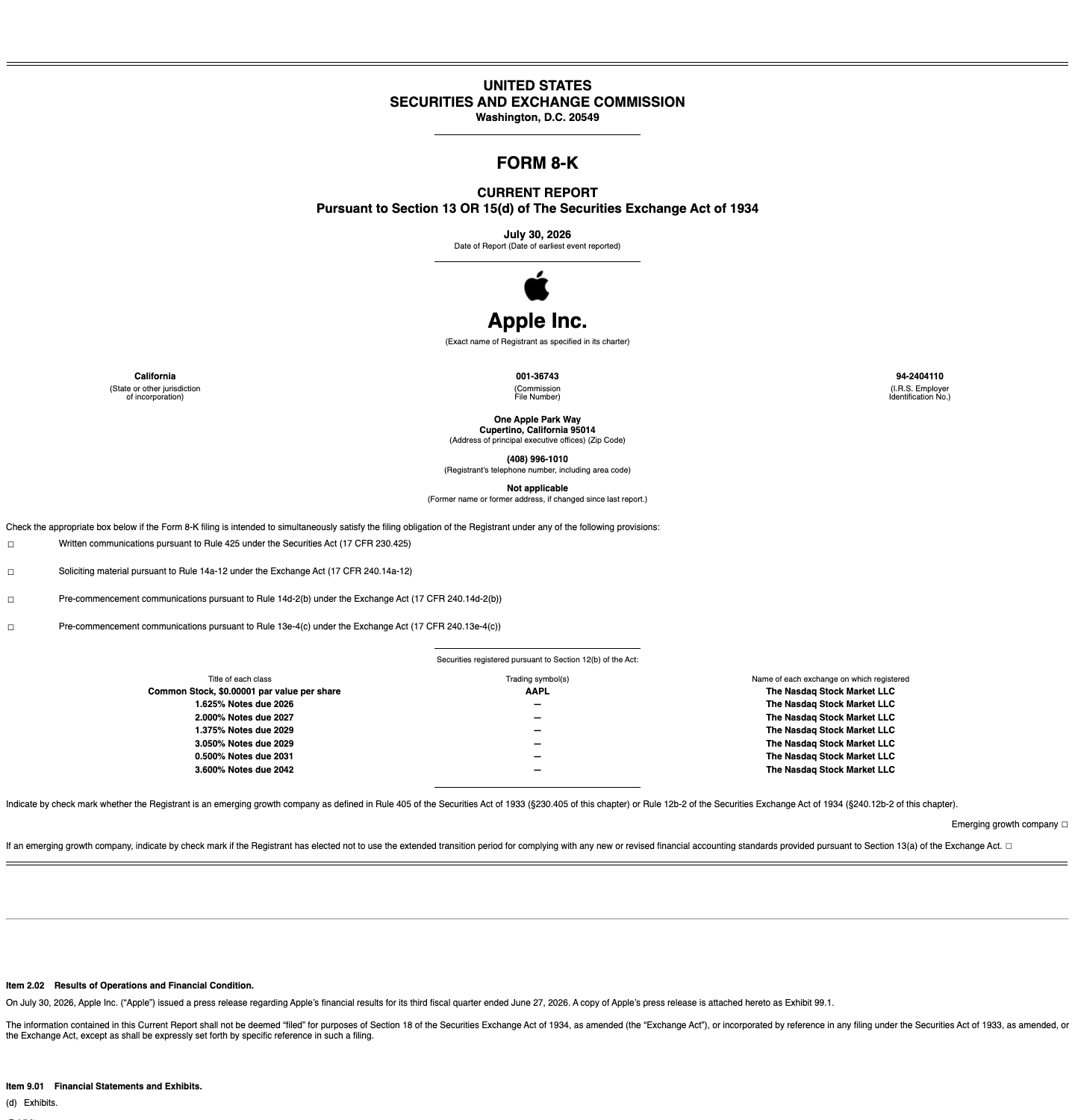
Notice the item numbers and the exhibit: this is the exact document every earnings headline is born from.
Within minutes, hundreds of headlines appear: “Apple smashes expectations” on one site, “iPhone disappoints” on another. Same numbers, opposite adjectives, depending on who wrote the story. If you read the 8-K first, the exact words Apple chose to stand behind, the headlines turn into entertainment rather than information.
And finding that 8-K takes under a minute: Apple’s EDGAR page lists it with its date and description, like every other filing.
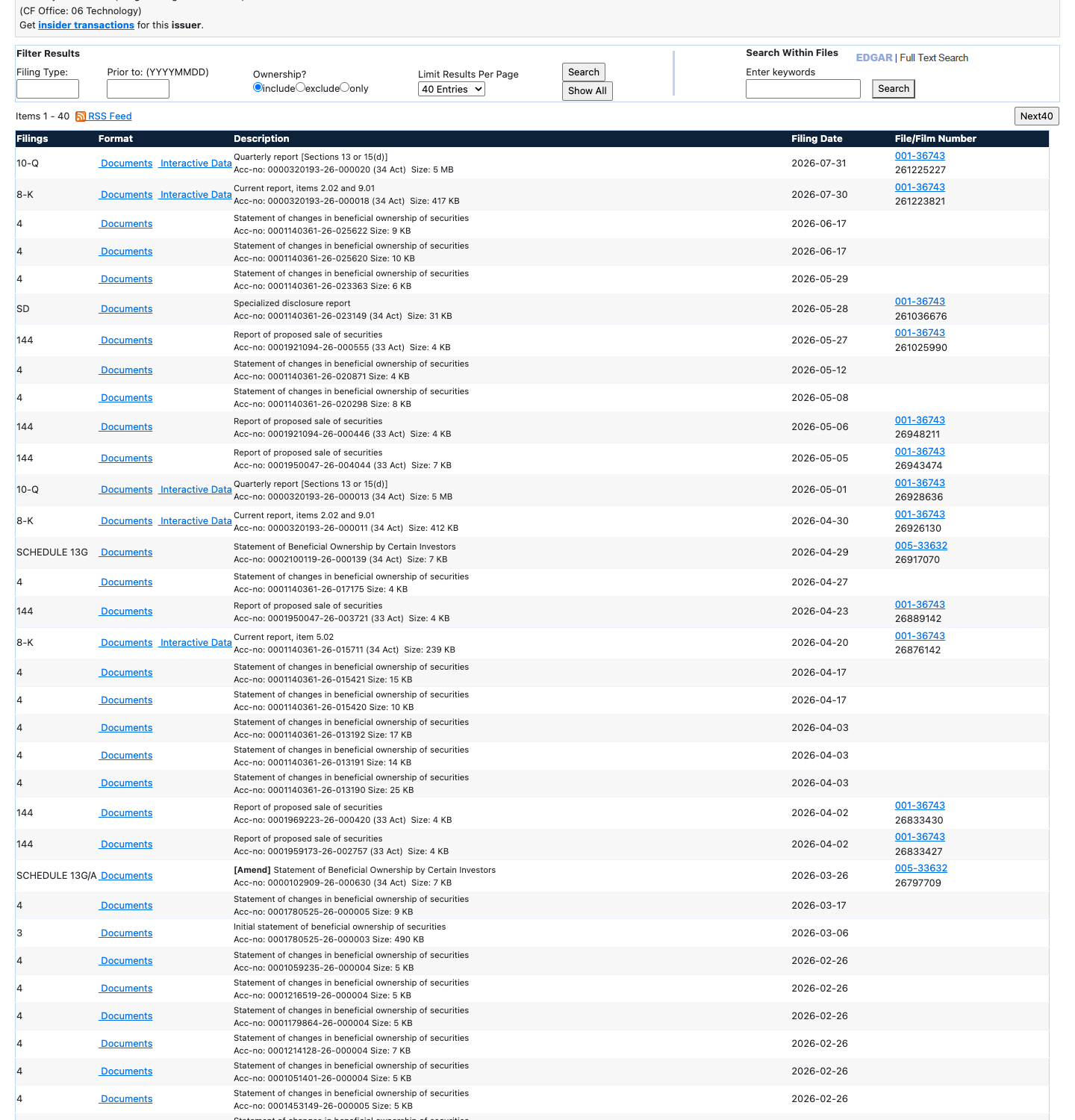
Notice the description column: it even names the items inside each filing, like a label on every envelope.
Two honest limits before you go. First, this chapter describes a typical pattern, not one specific article; the habit is the point, not the example. Second, filings are not angels either. A company can legally bury awkward news on page 87 of a long document, and some do. That is exactly why this course teaches you to read the filing instead of reading about the filing. Later modules will show you where companies hide things.
Try it yourself
Open Apple’s most recent 8-K that mentions Item 2.02 and read the attached press release: its own headline and its first table of numbers. Then search the news for that same day and compare. Count the adjectives the headlines added that Apple never used.
Key takeaways
- A filing is signed, exact, timestamped and permanent; a headline is none of these.
- When the filing and the news disagree, the filing wins. Always.
- Companies fix wrong filings with public amendments; headlines get fixed, if at all, by quiet corrections.
- Read the filing first, then enjoy the news for what it is: commentary.
Read one real thing
Apple’s 8-K filings on EDGAR. Notice how the description column names the items, like a table of contents for the company’s sudden news.
Watch this chapter
The video edition, on our YouTube channel
Listen to this chapter
Read by Ritu, a synthetic voice from Sarvam AI