Money Back to Owners: Dividends and Buybacks
What you will learn
- What dividends and buybacks are, and how each one rewards owners
- How to read dividend yield and the payout ratio
- Why Apple is really a buyback giant with a tiny dividend
- Why a very high yield can be a warning, not a gift
Your uncle’s kirana store had a great year. The shop needs some money for a bigger fridge, but there is plenty left over. What does he do with the rest? He takes it home, because he is the owner. Companies face the same choice, and they have two ways to send money home to their owners.
Dividends are the simple way: a cash payment for every share you own, usually every quarter. If a company pays $1 per share per year and the share costs $100, the dividend yield is 1%. The yield is like the interest rate on the stock: the yearly dividend divided by the price. A second useful number is the payout ratio: dividends divided by profit. It tells you how much of the year’s profit is being posted home to owners.
Buybacks are the quiet way. The company goes into the market, buys its own shares, and cancels them. Picture a pizza cut into eight slices. Remove two slices and re-cut the same pizza into six: every slice is now bigger. Same company, fewer shares, so each share owns a bigger piece of every future rupee of profit.
Apple: small dividend, giant buyback
Apple pays about $1 per share per year, 25 cents each quarter. At recent prices the yield is only about 0.4% to 0.5%, tiny. The payout ratio is around 15%, so most of the profit stays inside the company.
But look at the buybacks. In its 2024 financial year, Apple spent about $95 billion buying back its own shares, roughly ₹7.9 lakh crore in a single year, more than the entire yearly profit of almost any other company on earth. Over about ten years, Apple’s share count has fallen from around 26 billion to around 15 billion. Every surviving share keeps getting a bigger slice of the same pizza.
Add the two together: dividends of about $15 billion plus buybacks of about $95 billion means Apple returned roughly $110 billion to owners in one year. That, remember, is what Chapter 3’s free cash flow was for.
For contrast, meet Coca-Cola. Its dividend yield is around 3%, roughly six times Apple’s, and it has raised its dividend every single year for more than 60 years. Many owners hold such companies mainly for that steady cash, like a rent cheque from a shop you never have to repaint.
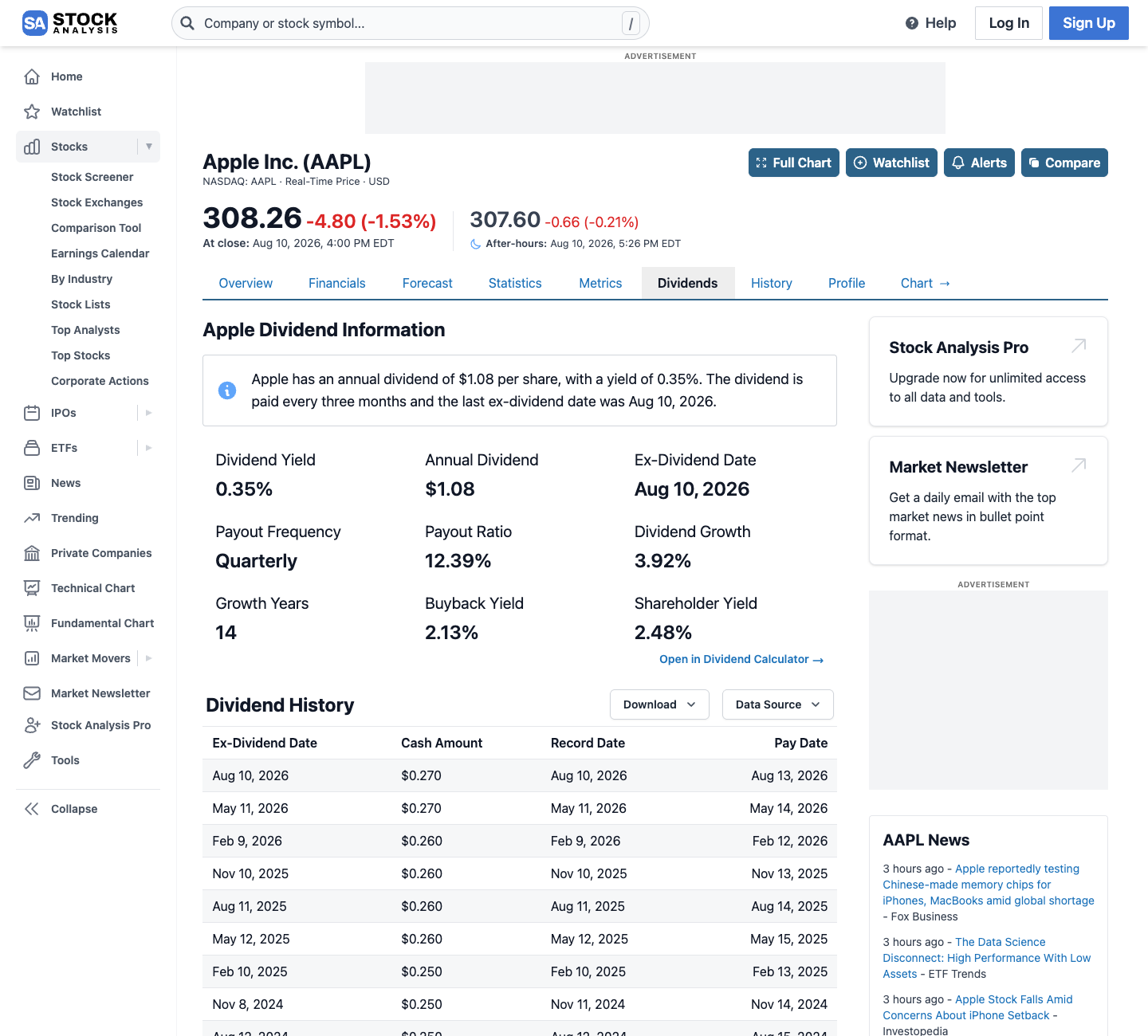
Notice the small yield but the steady quarterly payments, repeating year after year.
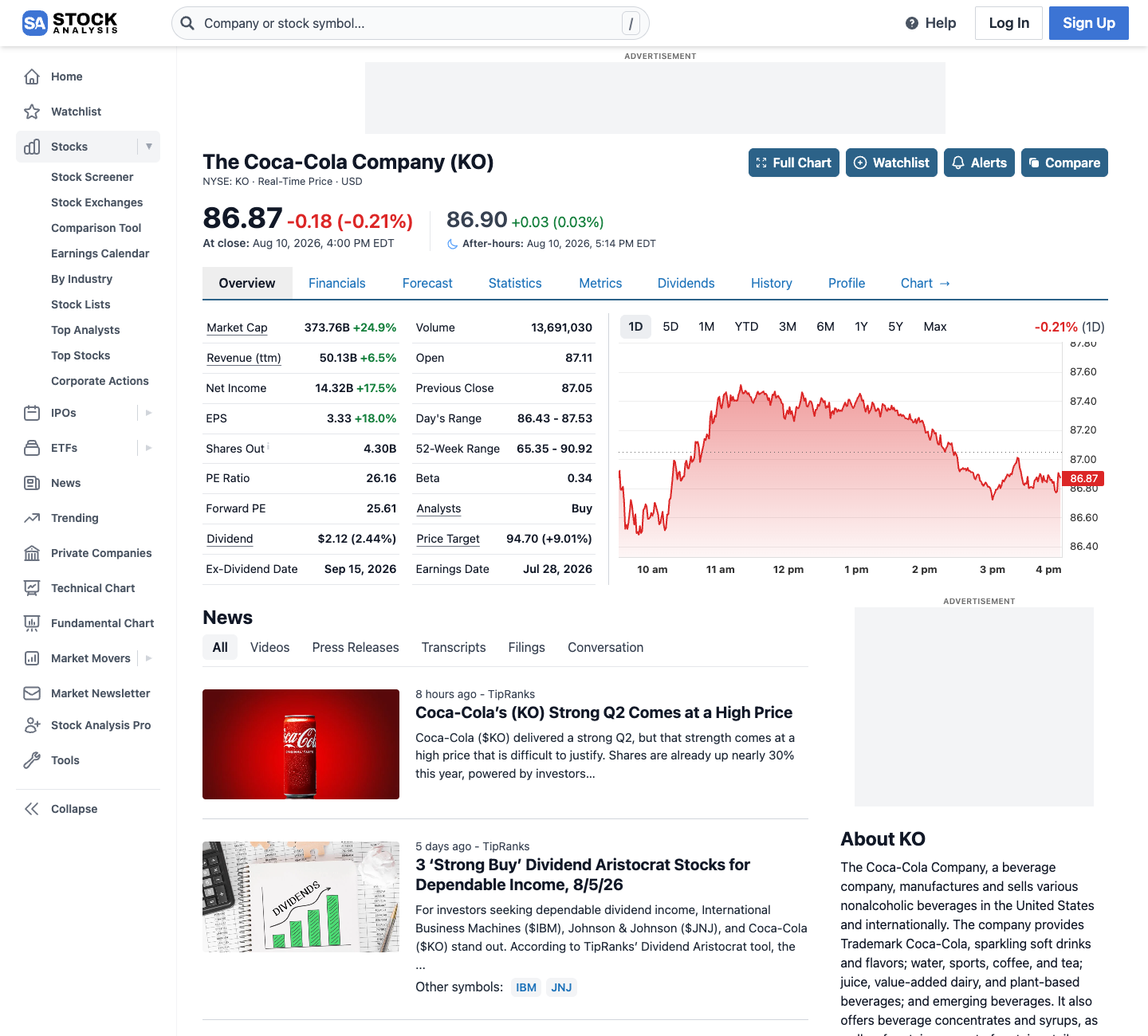
Notice Coca-Cola’s dividend yield in the stats panel, and compare it with Apple’s.
Now the honesty paragraph, because this topic attracts bad advice like few others. A very high yield is not free money. It often means the share price crashed because the business is in trouble, and the dividend itself may be cut next. And buybacks only help owners when they are done at sensible prices. A company buying back overpriced shares is like your uncle restocking mangoes at ₹500 a dozen: it looks generous, and it quietly destroys value.
Try it yourself
Open Apple’s dividend page on StockAnalysis and find the yearly dividend per share. Convert it to rupees (about ₹83 per dollar): how many rupees a year does one Apple share pay? Now open Coca-Cola’s page and do the same sum. Then compare the two yields and say, in one line, which stock pays more cash for every ₹100 you put in.
Key takeaways
- Dividends put cash in your hand; buybacks make each of your shares a bigger slice of the company.
- Yield and payout ratio tell you the size of a dividend and the strain of paying it.
- A very high yield often warns of trouble; check the business before trusting the cash.
- Buybacks help only at sensible prices; at silly prices they waste the owners’ money.
Read one real thing: Apple’s 2024 annual report (Form 10-K) on SEC.gov. In the cash flow statement, find the financing activities section and notice the line “Repurchases of common stock”: that is the buyback, in the company’s own numbers.
Watch this chapter
The video edition, on our YouTube channel
Listen to this chapter
Read by Ritu, a synthetic voice from Sarvam AI