The 45-minute skim: a full method from cover to cover
What you will learn
- A fixed route through any 10-K that takes about 45 minutes
- What to read fully, what to scan, and what to skip on a first pass
- The five-line summary, including the line that moves against you
- What a skim can and cannot tell you
The night before an exam, you do not read the whole textbook. You have a route: headings first, boxed definitions next, solved examples last. A good skim is not laziness. It is a method.
The same idea works for a 10-K, with an honest limit: in 45 minutes you will not become an expert. You will learn how the company makes money, whether it grows, what its bosses worry about, and whether it deserves more of your time. That is all a skim is for.
The route, with a clock
Minutes 0 to 5: cover page and table of contents. Note the company’s name, where its fiscal year ends, and who the auditor is. Find where Items 1, 1A, 7 and 8 begin. This is your map.
Minutes 5 to 15: Item 1, first two pages. Answer one question in writing: how does this company make money? If you cannot write it in two lines, read one more page.
Minutes 15 to 20: Item 1A, bold headings only. Scan every risk heading, read fully only the two or three that are specific to this company. Star them.
Minutes 20 to 30: Item 7, the MD&A. Read the first page and the sales tables. Write down what grew and what shrank, in management’s own words.
Minutes 30 to 40: Item 8, the statements plus two notes. On the income statement, find sales and profit, and glance at the share count. On the balance sheet, compare cash against debt. Then read two notes: debt, and commitments and contingencies.
Minutes 40 to 45: write your five-line summary. What it sells; growing or not; what management worries about; debt heavy or light; one question you still have. One rule above all: print the line that moves against you. A summary where every number points one way is a brochure, not a summary. The contrary number is usually the most informative line on the page.
The route, run on Apple
- What it sells: iPhones (about half of sales), Macs, iPads and wearables, plus services like the App Store and iCloud.
- Growing or not: 2025 sales up 6% to $416 billion, profit $112 billion, services growing fastest at 14%. The line that moves against me: Greater China fell 4%.
- Management’s worries: a concentrated supply chain, new tariffs, and regulators circling the App Store.
- Debt: about $99 billion owed, against $132 billion of cash and securities. Heavy in absolute terms, light next to the cash pile.
- One question: can services keep growing if regulators keep squeezing the App Store?
Five lines, 45 minutes, from a document that looked unreadable an hour ago.
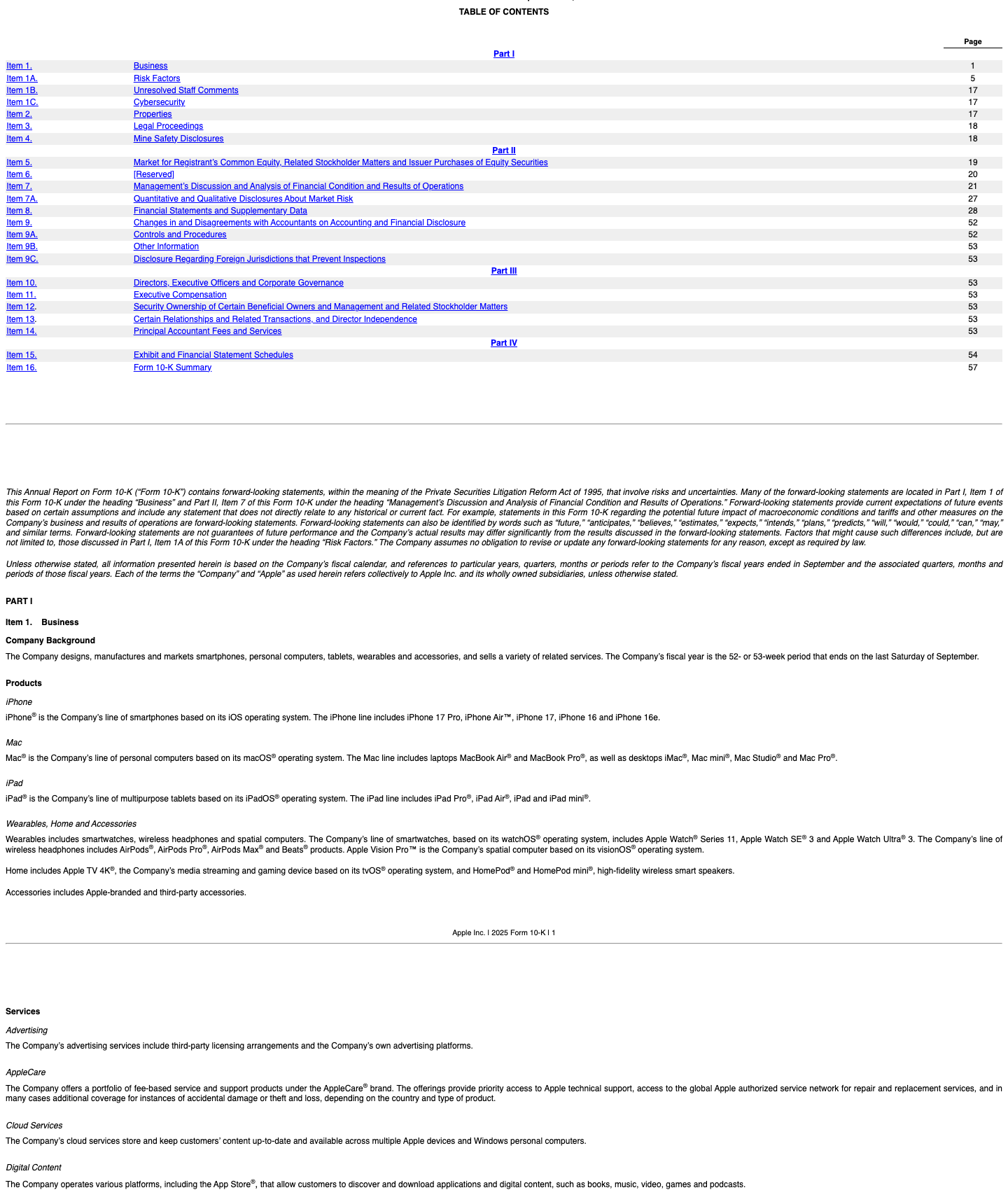
Your route map: notice that the whole skim touches only four Items: 1, 1A, 7 and 8.
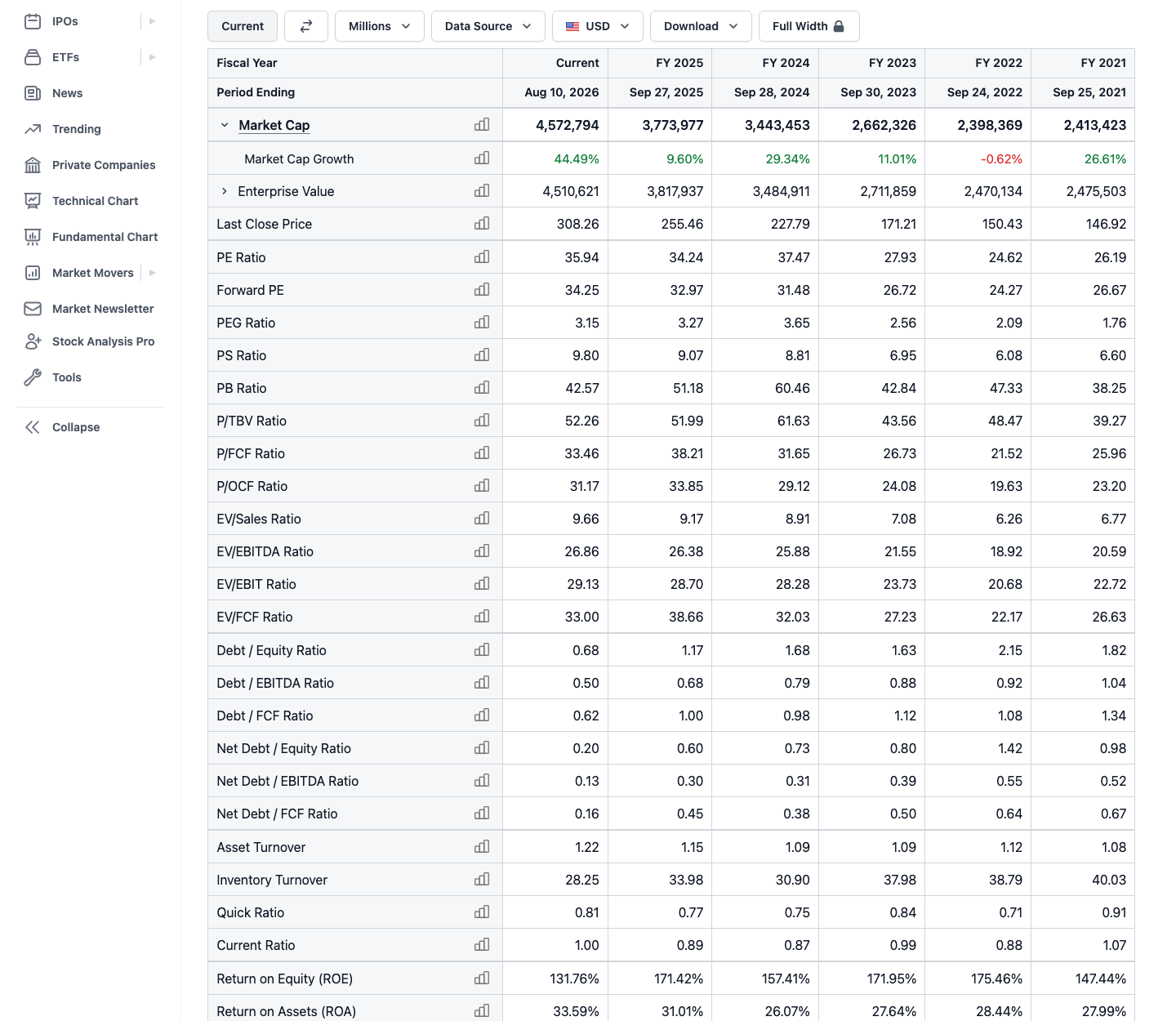
Cross-check your five lines against a summary page like this only after your skim. The numbers mean more once your view is your own.
One last honesty note: a skim tells you whether to dig deeper. It does not tell you whether to buy a share. Deeper work starts with the five-year habit from the last chapter, then two more questions. Where did the cash go, and at what price? A buyback above what the business is worth destroys value while looking like discipline. And are the people running it exposed to the consequences? Related-party dealings, insider holdings and director pay live in the proxy statement, which the next module opens. That judgement takes far more work, and this classroom will never pretend otherwise.
Try it yourself
Run the full 45-minute route on Microsoft’s latest 10-K. Find it on EDGAR the way you found Apple’s, follow the six steps, and write your five-line summary, including the line that moves against you. Then compare: how is Microsoft’s way of making money different from Apple’s?
Key takeaways
- Any 10-K can be skimmed in 45 minutes on a fixed route: cover, Item 1, risk headings, MD&A, statements plus two notes.
- Finish with a written five-line summary, and print the line that moves against you. Writing forces honesty.
- Check summary websites only after the skim, so your first view is your own.
- A skim tells you whether to dig deeper, never whether to buy. Three or four repetitions on different companies will make the format feel familiar.
Read one real thing: Apple’s 10-K filings list on EDGAR. Notice that you can skim last year’s 10-K next to this year’s and spot exactly what changed.
Listen to this chapter
Read by Ritu, a synthetic voice from Sarvam AI