The notes: where the bodies are buried (debt, leases, lawsuits, segments)
What you will learn
- What the notes to the financial statements are, and why professionals read them first
- The four notes worth reading on a first pass
- The five-year habit: three checks that catch what one tidy year hides
- How to find any note in seconds with a simple search
Old newsroom saying: the bodies are buried on the back page: the most important, least flattering facts sit where nobody reads. In a 10-K, that place is the notes to the financial statements: the numbered explanations after the main tables in Item 8. The balance sheet gives one tidy line; the note attached tells the real story.
A tiffin bill saying only “₹3,000 due” tells you little. The back of the bill lists: ₹1,200 for this month, ₹800 carried over from last month, and a ₹1,000 deposit refundable only in 2028. Same total, very different story. The notes are the back of the bill.
Four notes to read first, shown through Apple’s 2025 10-K
Debt. Apple’s balance sheet shows term debt of about $91 billion. The debt note reveals what that really is: bonds paying 0% to 4.85% interest, with repayment dates running from 2025 to 2062. On top sits $8 billion of commercial paper, very short-term IOUs due within months. Total debt: roughly $99 billion, about ₹8.7 lakh crore.
Leases. A lease is a long-term rental; years of locked-in rent are a real obligation, almost like debt. Apple’s lease note lists $16.8 billion of fixed lease payments ahead, about ₹1.5 lakh crore, covering shops, offices and data centres.
Lawsuits. The contingencies note covers possible future costs, mostly court cases. Apple books a cost only when a loss is probable and can be estimated. For live fights, see Item 3: the European Union is investigating App Store rules under its Digital Markets Act. A company rarely writes “we might lose badly”; it writes the case name. Notice the name.
Segments. A segment is a slice of the business reported separately. Apple’s five geographic slices include the Americas, up 7% to $178 billion, and Greater China, down 4% to $64 billion: one engine slowing while another speeds up, visible only here. And yes, in Apple’s book, India sits inside “Europe”.
Honesty first: nobody reads every note on a first pass. These four catch most of what matters.
The five-year habit: three checks before you trust the numbers
The notes explain one year. Five years of statements catch what one tidy year can hide. Three checks, a minute each on a summary page.
- Cash against profit. Add five years of operating cash flow, the real cash produced, beside five years of profit. Profit must turn into cash, so the two should be neighbours. Apple’s five years: about $566 billion of cash against $497 billion of profit. Real. Profit climbing while cash stays flat is ink, not money. Watch the direction: cash catching up with profit is good news, cash fading is not.
- Receivables against sales. Receivables are money customers still owe. A kirana store selling on credit can show record sales with an empty till; so can a company. Apple passes: about $40 billion owed to it, roughly a month of sales. Receivables outrunning sales several years in a row is a siren.
- Share count. Earnings per share is profit divided by the number of shares: fewer slices make each slice bigger. Apple retired about one share in nine from 2021 to 2025, honest and disclosed, but it flatters per-share growth. A company printing shares yearly does the reverse to you.
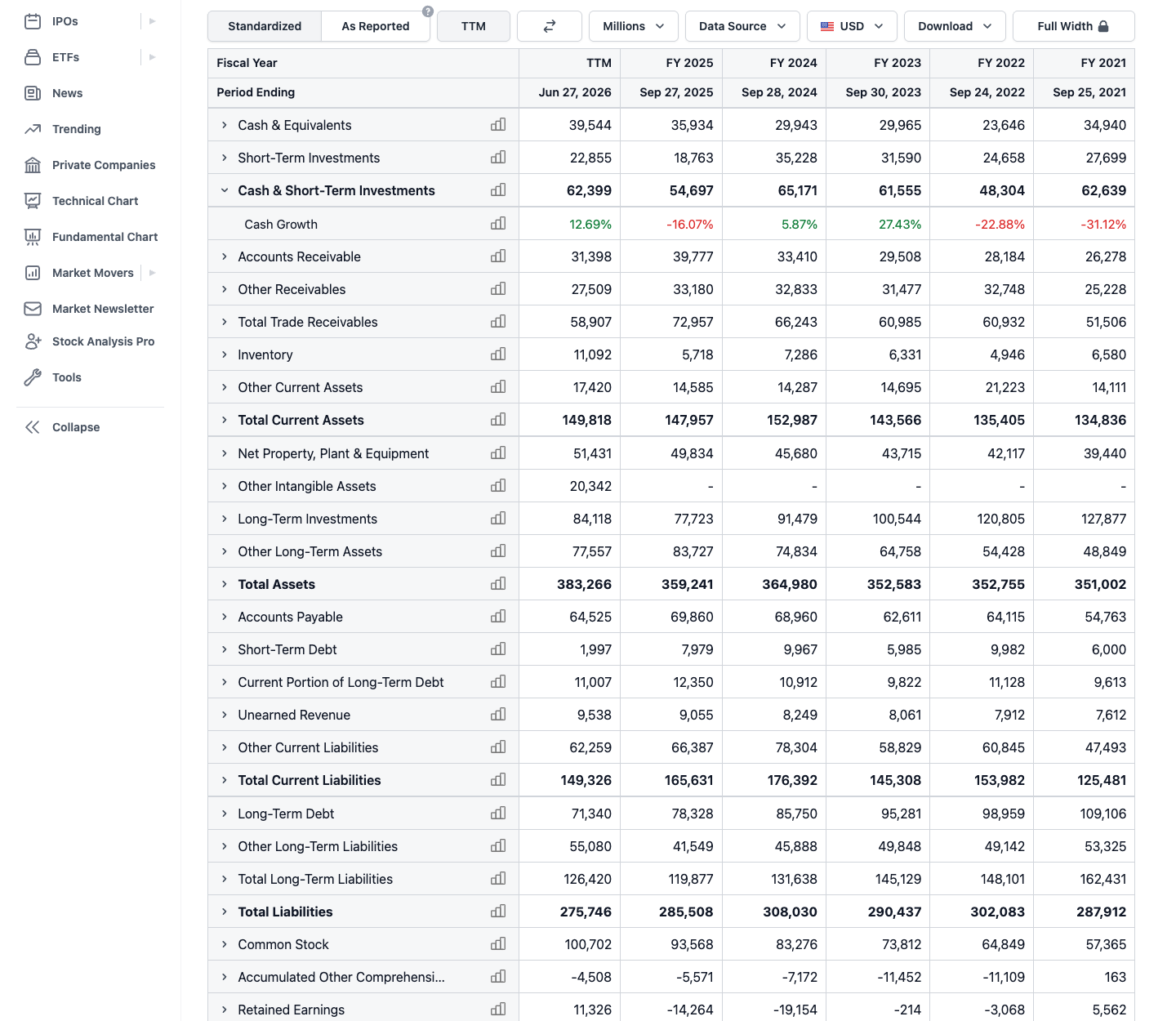
Notice how the balance sheet compresses debt into two neat lines. The rates, due dates and currencies live only in the note.
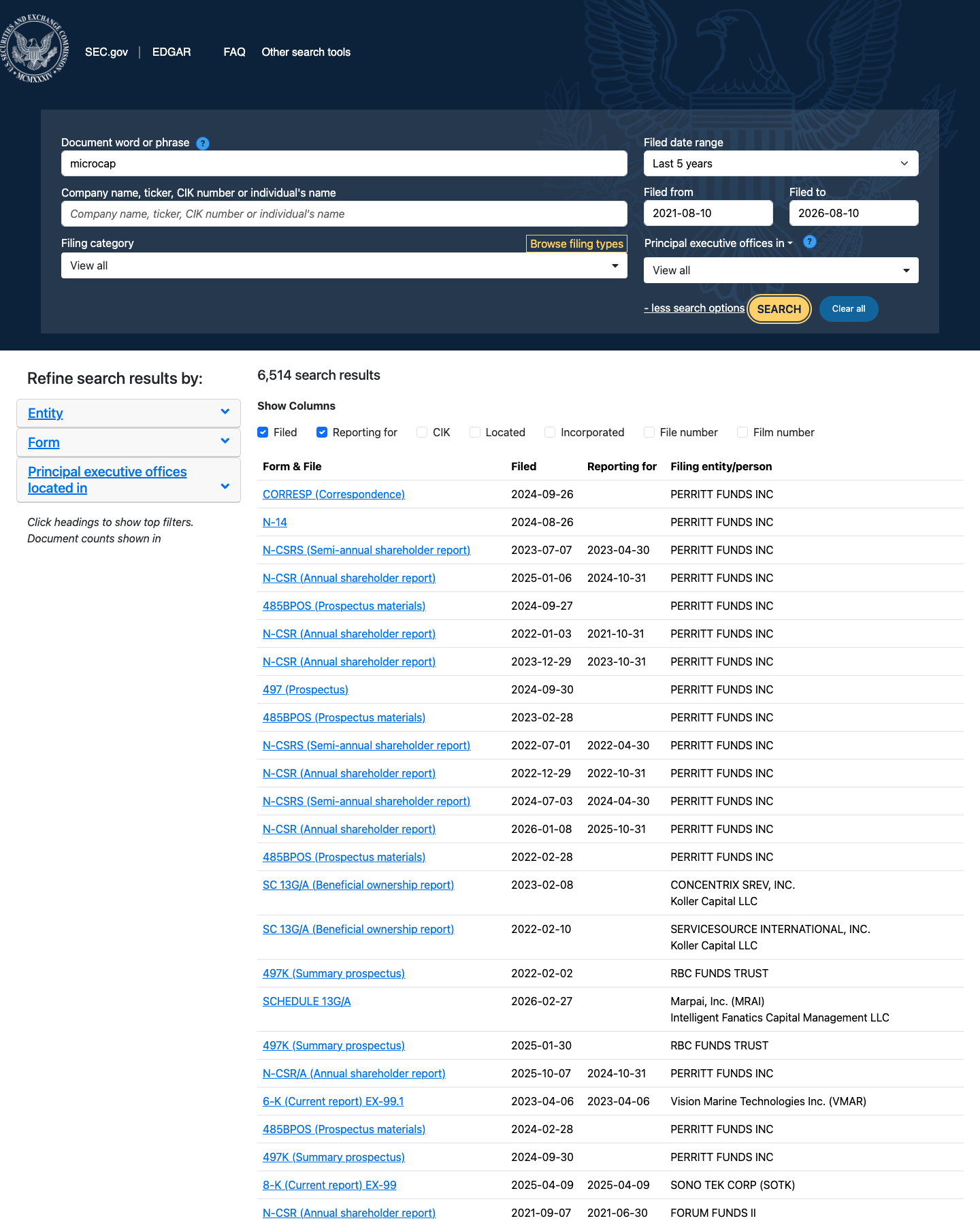
No scrolling through 60 pages: searching “leases” jumps to the note, in this filing or across thousands of companies.
Try it yourself
In Apple’s 10-K, press Ctrl+F (or Cmd+F) for “Leases” inside Item 8 and find the $16.8 billion figure. Then open Apple’s cash flow page and run the first check: five years of operating cash flow against five years of profit. Do the two totals sit close?
Key takeaways
- The main tables summarise; the notes explain. Read four notes first: debt, leases, contingencies, and segments.
- Then the five-year habit: cash against profit, receivables against sales, the share count.
- Apple owes about $99 billion and has promised suppliers over $56 billion in future purchases. Both live in the notes, not the headlines.
- “Where the bodies are buried”: the least-read pages often hold the most important facts.
Read one real thing: Apple’s 2025 10-K, the debt note in Item 8. Notice the maturity column: repayments spread from 2025 to 2062, a 37-year line of promises.
Listen to this chapter
Read by Ritu, a synthetic voice from Sarvam AI