Form 4: when insiders trade their own stock
What you will learn
- Who must file a Form 4, and how fast
- The transaction codes: P, S, A, F, M
- Why most insider "sales" are just pay and taxes
- Why patterns beat single filings
Suppose the captain of your cricket team quietly sold her signed bat collection. Fans would whisper: does she know something about the team? In the stock market, insiders, the people who run a company and know it from the inside, really can move prices with their personal trades. So US law makes them confess, quickly and in public. That confession form is Form 4.
Who files it: officers (senior managers), directors (board members), and anyone owning 10% or more of the company. When: within two business days of the trade. A Friday sale is public by Tuesday.
Form 4 has two siblings. Form 3 is the opening hello, filed when someone first becomes an insider. Form 5 is a yearly catch-up for small changes that escaped Form 4. Outsiders have their own pair: buy more than 5% of a company and you must file a Schedule 13G if you plan to sit quietly, or a Schedule 13D if you plan to push for change.
Reading the table
Every Form 4 shows the insider’s name, their job, and Table I: each trade’s date, a one-letter code, the number of shares, the price, and how many shares the person owns afterwards. The code letter carries the story:
- P: open market purchase. Bought with their own money. The loudest signal of all.
- S: a sale.
- A: a grant, free shares received as pay.
- F: shares handed back to the company to pay a tax bill.
- M: an exercise, usually turning stock units into real shares.
A real one: pay arriving, not faith leaving
On June 17, 2026, Apple’s general counsel (its top lawyer) Jennifer Newstead filed a Form 4 covering June 15. Code M: 30,104 shares arrived as her restricted stock units vested (RSUs are promises of shares that become yours over time; “vested” means the promise came due). Code F: 16,238 of those shares went straight back to Apple to cover taxes, at $296.42 each (about Rs 26,000), roughly $4.8 million in total (about Rs 42 crore).
A lazy headline could scream “Apple insider sells $4.8 million!” The codes tell the truth: her pay arrived, and the taxman took his cut. Nothing was sold in the open market at all.
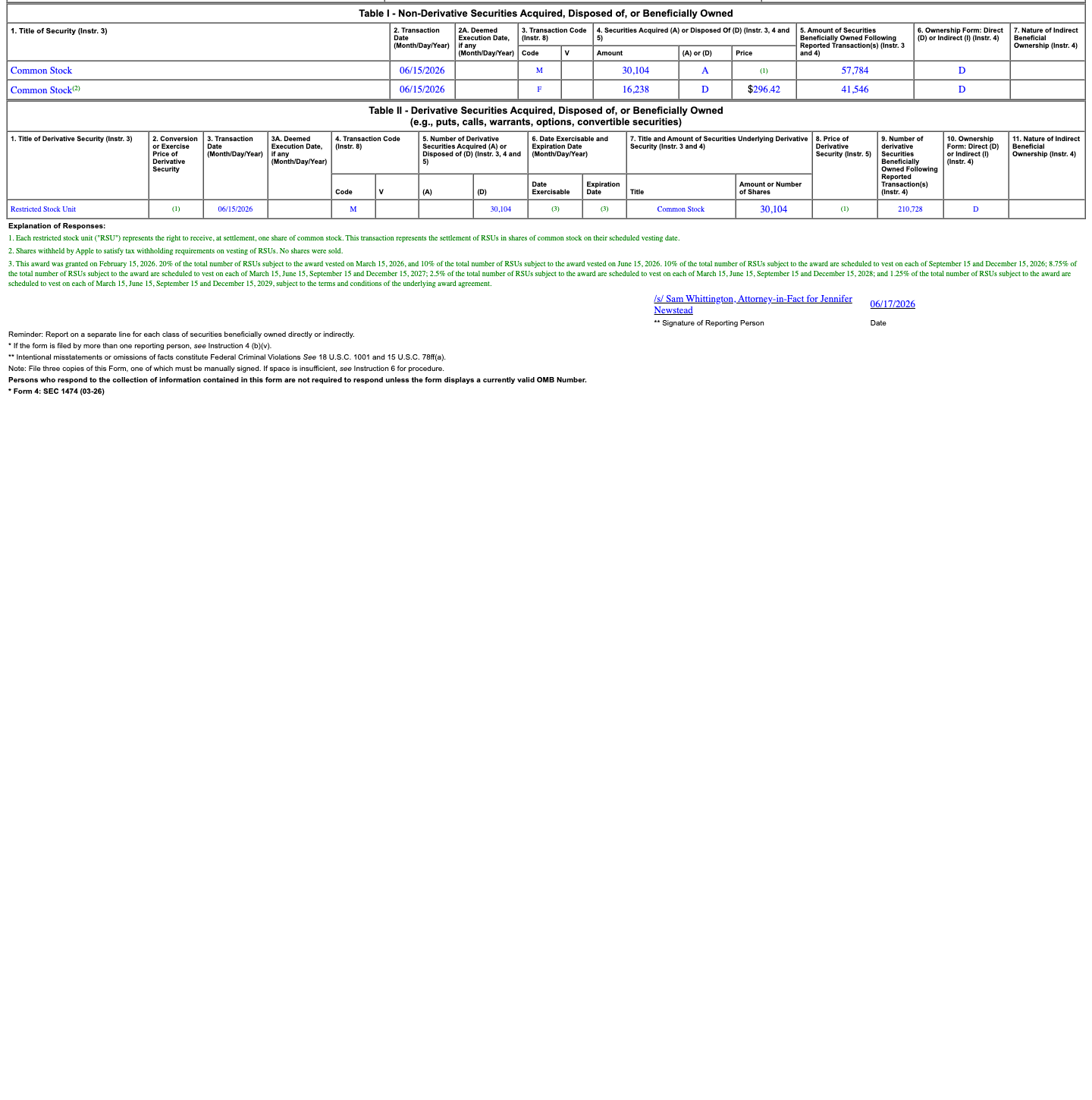 Notice the code column, and the last column with shares owned after the trade: always check what remains, not just what left.
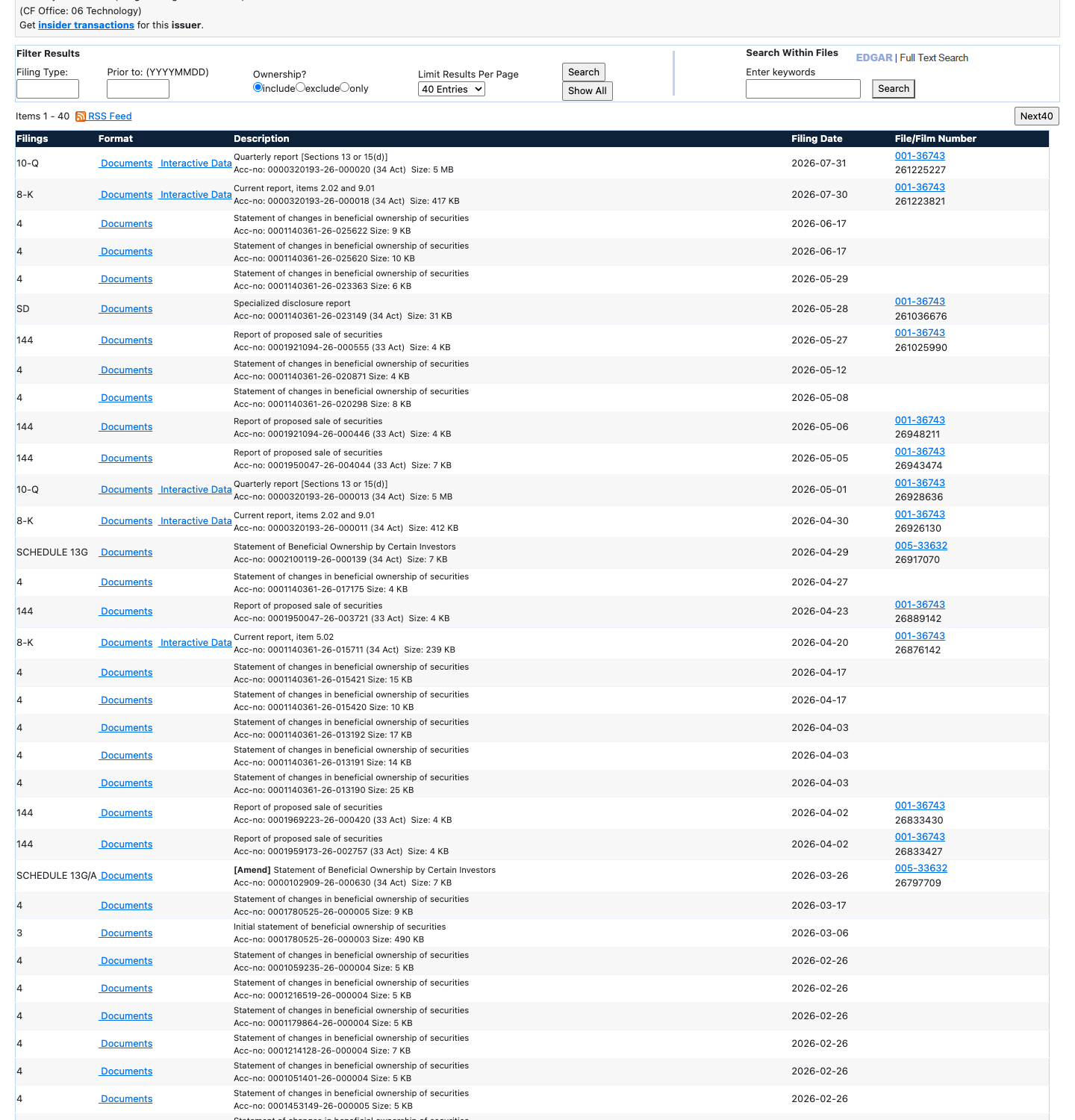 Notice how many Form 4s a giant like Apple collects in a year: mostly pay, vesting, and taxes.
One more wrinkle. Insiders can sell through Rule 10b5-1 plans: selling calendars written months in advance, like a standing instruction to sell some shares every quarter. Even a real code S can be scheduled long before anything happened at the company.
Now the honest part. A single Form 4 tells you almost nothing. What rewards study is a pattern: several insiders making code P purchases with their own money over weeks says far more than any one sale. And remember the innocent reasons to sell: tax, a house, college fees. Never copy an insider trade, because you can see what they did but never why.
Try it yourself
On Apple's Form 4 list on EDGAR, open the newest filing. Write down the person's job, the code letters, and your verdict: own-money buy, sale, or pay and tax? Then check the stock's recent chart on StockAnalysis: did the market even notice?
Key takeaways
- Form 4 is insiders reporting trades in their own company's stock, within two business days.
- The codes carry the meaning: P bought, S sold, A granted, F tax, M exercise.
- Most insider activity is pay and tax, not secret knowledge.
- Look for patterns across months; ignore single filings.
- Never mirror an insider: you know what they did, never why.
Read one real thing
Jennifer Newstead’s Form 4 of June 17, 2026. Notice the footnotes under the table: that is where the code letters get translated into plain English.
Listen to this chapter
Read by Ritu, a synthetic voice from Sarvam AI