The 13F: every big fund’s quarterly confession
What you will learn
- What a Form 13F is and who must file it
- Why the numbers are up to 45 days old by the time you see them
- What a 13F shows, and the big things it hides
- How to find any fund’s 13F, free, on SEC.gov
Imagine your school forced every coaching centre in town to pin its full student list to a notice board four times a year, so anyone could see exactly which subjects each centre was betting on. America does something very close to that with its biggest money managers.
The notice is called Form 13F. A fund manager (a professional who invests other people’s money for a living) who handles $100 million or more, about ₹900 crore, must send one to the SEC four times a year. The SEC, the Securities and Exchange Commission, is the referee of US markets, and it puts every filing (a document officially submitted to it) online, free, on a website called EDGAR.
A worked example: Berkshire Hathaway
Berkshire Hathaway is the company run by Warren Buffett, probably the most watched investor alive. Search EDGAR for Berkshire and filter for the form type 13F-HR, and you reach a plain table called the information table. Row by row, it lists every US stock Berkshire owned on the last day of the quarter: the company name, how many shares, and the market value.
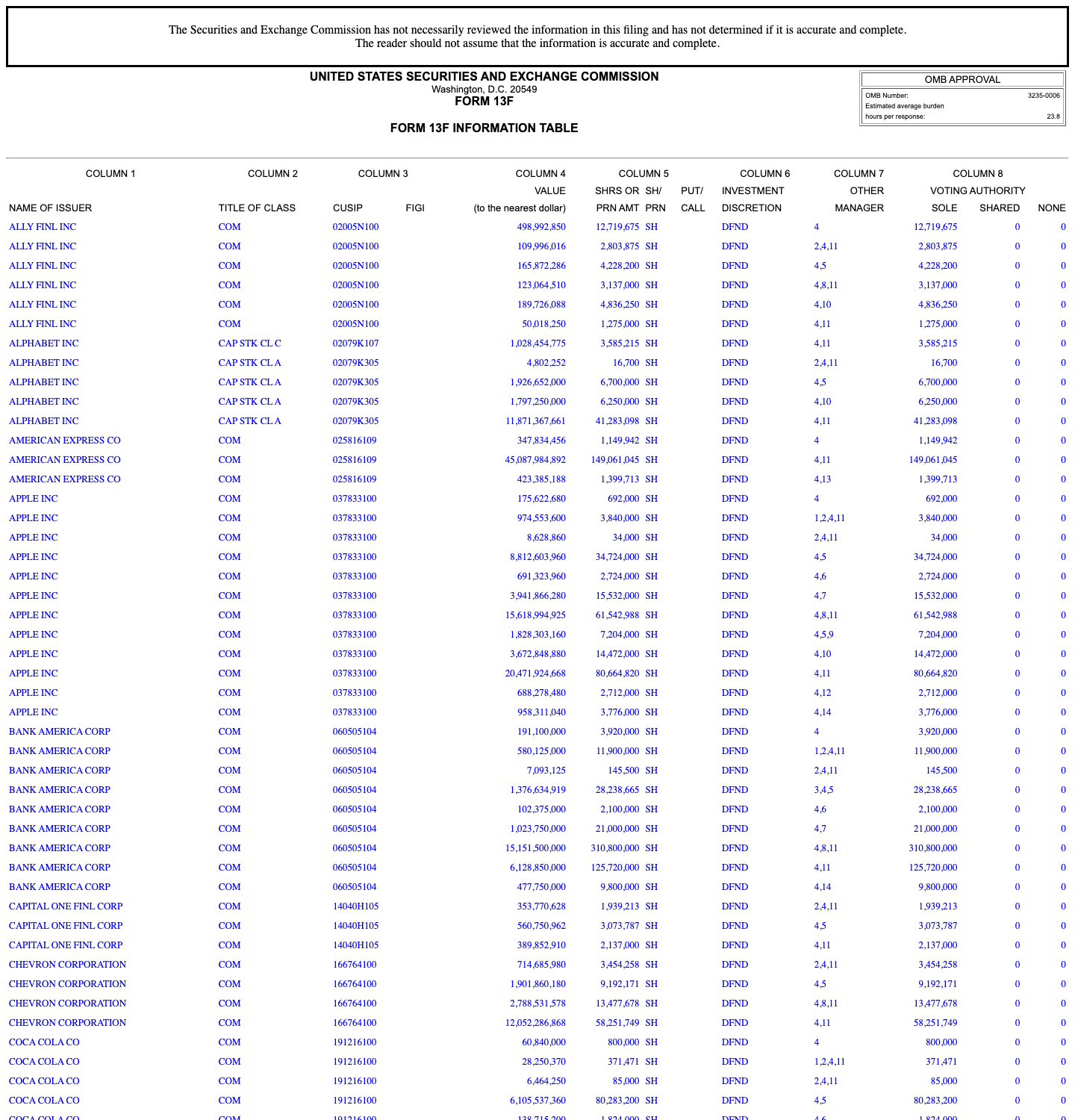
Notice two things: the value column is in thousands of dollars (add three zeros), and Apple, the iPhone maker, usually sits at or near the top.
That is the whole magic of the 13F. For zero rupees, you can peek at the shopping list of one of the best investors in history.
Now the catch, and it is a big one
The rules give funds up to 45 days after the quarter ends to file. So the list for January to March can appear as late as the middle of May. By the time you read it, the photo is already old, and the fund may have sold half of what you see. A 13F is a wedding album, not a live video call: real, but from the past.
It also hides more than it shows. A 13F lists only certain US-listed shares. You do not see the fund’s cash, its bonds, its foreign stocks, or its short positions (bets that make money when a price falls). A fund could look fully invested in the table while half its money sits quietly in cash.
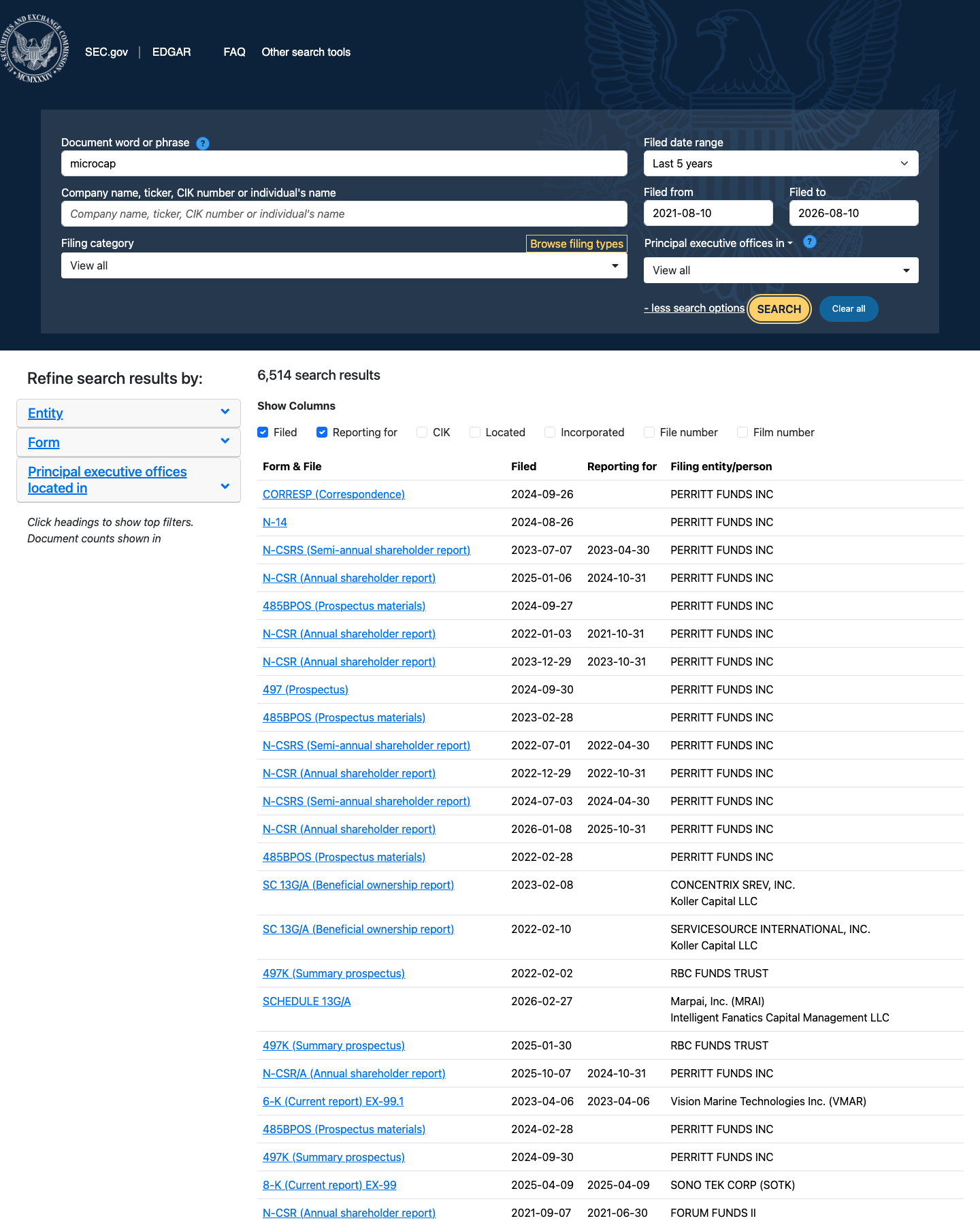
EDGAR’s full-text search is the free tool you will use in the exercise below.
So read 13Fs the way you would read a great batsman’s old scorecards: to learn how he thinks, not to predict his next innings.
Try it yourself
Go to EDGAR’s full-text search at sec.gov and type “Berkshire Hathaway 13F-HR”. Open the newest information table. Write down two dates: the period of report (the day the snapshot was taken) and the filing date (the day it became public). Count the days between them. Then note the fund’s top three holdings and their values, remembering the three zeros. Ten minutes, and you have done something most adults never have.
Key takeaways
- A 13F is a quarterly confession: every big US fund manager (over $100 million) must list its US stock holdings.
- The list is free for anyone to read on EDGAR, the SEC’s website.
- It can be up to 45 days late when you see it. Treat it as history, not news.
- It shows only part of the picture: no cash, no bonds, no foreign shares, no short bets.
- Use it to study how smart money thinks. Copying it blindly is not a strategy.
Read one real thing: Berkshire Hathaway’s 13F filings on EDGAR. Open the latest 13F-HR and notice the gap between the period date and the filing date.
Watch this chapter
The video edition, on our YouTube channel
Listen to this chapter
Read by Ritu, a synthetic voice from Sarvam AI