Tender offers and big buybacks: the company bids for itself
What you will learn
- What a buyback is and why companies do it
- The difference between quiet buying and a tender offer
- Why fewer shares can mean more value per share
- Why buybacks are not automatically good news
Imagine ten friends each own one slip of a kirana store partnership. The store earns well and has spare cash. The store uses that cash to buy back two of the slips and tears them up. Now eight slips own the whole store. Each slip owns a bigger piece, and nobody lifted a finger.
That is a buyback: a company spends its own cash to buy its own shares, and those shares disappear. The same profits, spread over fewer shares, means more profit per share.
There are two ways to do it. The quiet way: the company buys in the open market over months, like any other buyer. The loud way: a tender offer, where the company publicly announces “send us your shares by this date and we will pay this fixed price”, usually a little above the market price to tempt you. To tender simply means to formally offer your shares back.
A worked example: Apple’s mountain of cash
Apple is the buyback king. In its 2024 financial year it spent about $95 billion buying its own shares. That is about Rs 7.9 lakh crore, more than the entire market value of most companies on Earth. In May 2024 it said it could spend up to $110 billion more. Since 2012, Apple has repurchased over $700 billion of its own stock, and its share count has fallen from about 26 billion shares (adjusted for splits) to about 15 billion. Each remaining share now owns a much bigger slice of the same company.
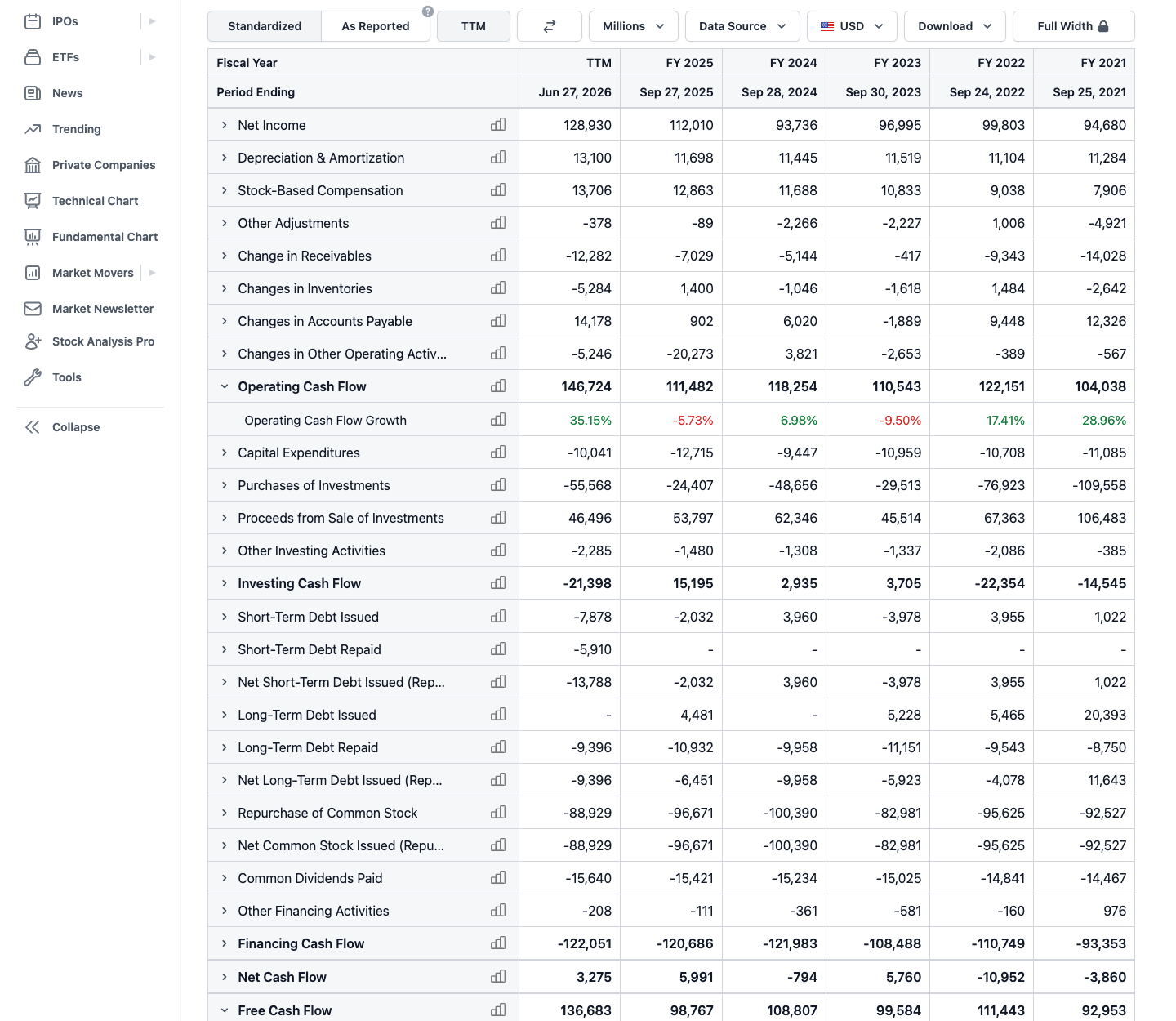 Notice the share repurchase line under financing activities: it dwarfs almost everything else on the page.
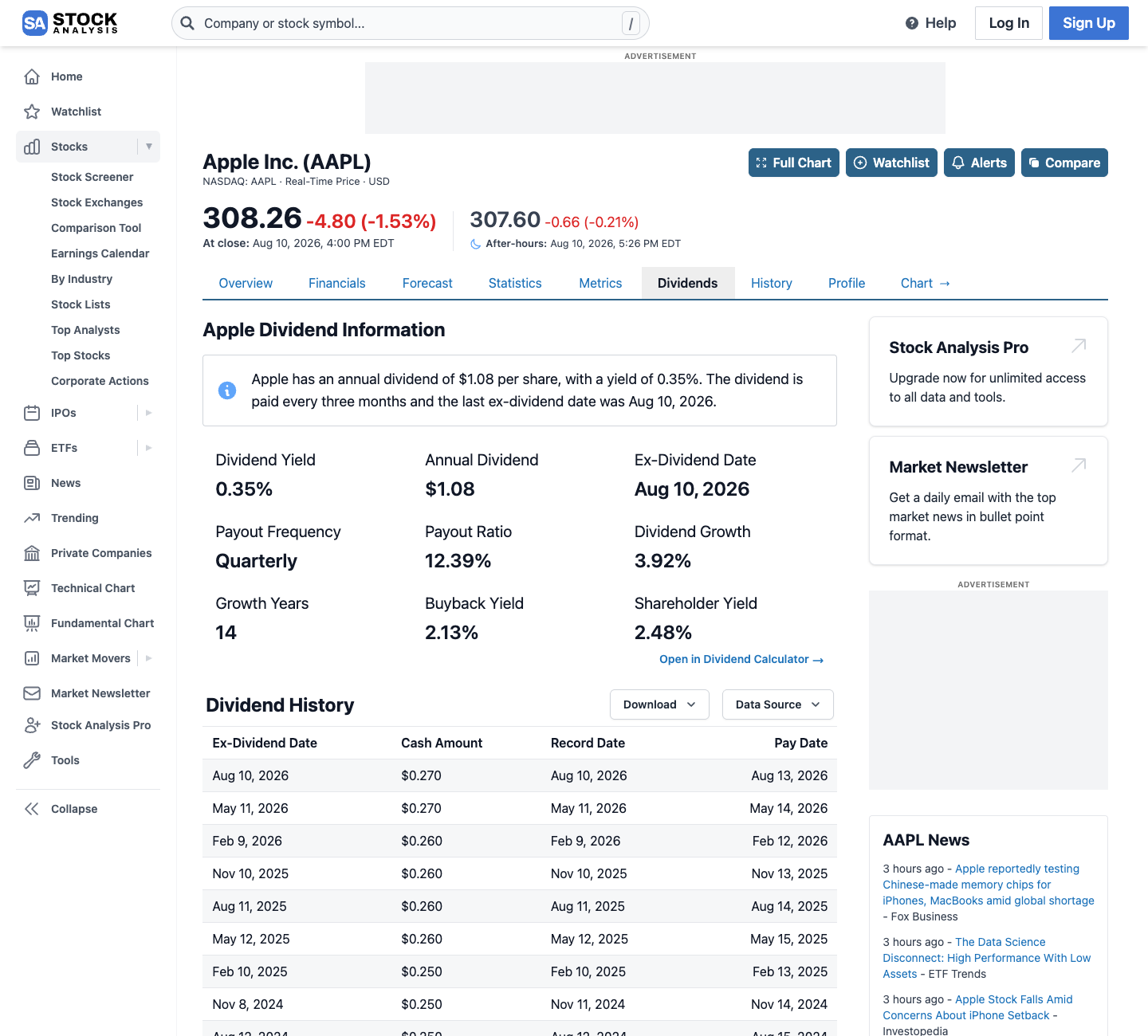 Notice how the buyback figure is far larger than the dividend: Apple returns much more cash through buybacks than through dividends.
The honest catch
A buyback only helps if the price paid is sensible. A company that buys its own shares while they are expensive is like our kirana store buying back slips at twice what they are worth: it destroys value with great confidence. Companies tend to buy most aggressively exactly when prices are high and everyone feels rich. So when you see a giant buyback number, the right question is not “how much?” but “at what price, compared to what the business earns?”
One more connection. Outsiders can make tender offers too. A bidder who wants to own a whole company can go straight to its shareholders and offer them cash for their shares, over the head of management. That is how unfriendly takeovers begin, and it is the same machinery you met in the merger chapter.
Try it yourself (10 minutes): open Apple’s dividend page on StockAnalysis and find the buyback amount for the latest year. Then open Apple’s financials page and find shares outstanding ten years ago and today. Work out the percentage fall. That number is how much bigger your slice would have grown without any extra money from you.
Key takeaways
- A buyback is a company spending its own cash to retire its own shares.
- Fewer shares means each share owns a bigger slice of the same business.
- A tender offer is a public, dated, fixed-price offer to buy shares, usually at a premium.
- Buybacks create value only when the price paid is sensible. Often it is not.
- Apple has spent over $700 billion on buybacks since 2012. Read the numbers yourself before being impressed.
Read one real thing: Apple’s cash flow statement on StockAnalysis. Notice “common stock repurchased” in the financing section, and compare it with the cash the business actually generated that year.
Listen to this chapter
Read by Ritu, a synthetic voice from Sarvam AI