Screen traps: cheap is not the same as good
What you will learn
- What a value trap is
- Four common ways a “cheap” stock is actually expensive
- Why cyclical companies look cheapest at the worst possible moment
- What a screener can never see
A ₹60 t-shirt that fades and tears in two weeks is not cheaper than a ₹500 shirt that lasts three years. It is more expensive per wear. Stocks play the same trick. A share can look like a bargain on every screener number and still be a painful thing to own, because the business underneath is quietly falling apart. Investors call this a value trap: a stock that looks cheap on the numbers and keeps getting cheaper, because it deserves to.
Here are the four traps that catch the most people.
Trap 1: the profit is falling
The P/E divides the price by last year’s profit. If profits are collapsing, you are dividing by a number that no longer exists. A company at a P/E of 6 whose profit then halves is really at 12. If it halves again, 24. The screener kept shouting “cheap” the whole way down.
Trap 2: the debt is hiding
A low P/E sitting on a mountain of loans is like a cheap flat that comes with an unpaid loan attached. The screener shows you one number; the balance sheet, the page that lists everything a company owns and owes, hides the other. Always check the debt before trusting a low P/E.
Trap 3: the profit was a one-time event
Sold a building, won a legal settlement: one fat year of “profit” that will never repeat. The P/E looks tiny until you ask where the profit came from. Screens do not ask that question. You have to.
Trap 4: the cyclical at the top
Cyclical companies are businesses whose profits swing with the economy, like steel, oil, and shipping. They look cheapest exactly at the top of the cycle, when profits are fattest, right before the downturn. Buying a cyclical at a P/E of 5 at the peak has hurt many grown-ups sure they had found the bargain of the decade.
What this looks like on a real page
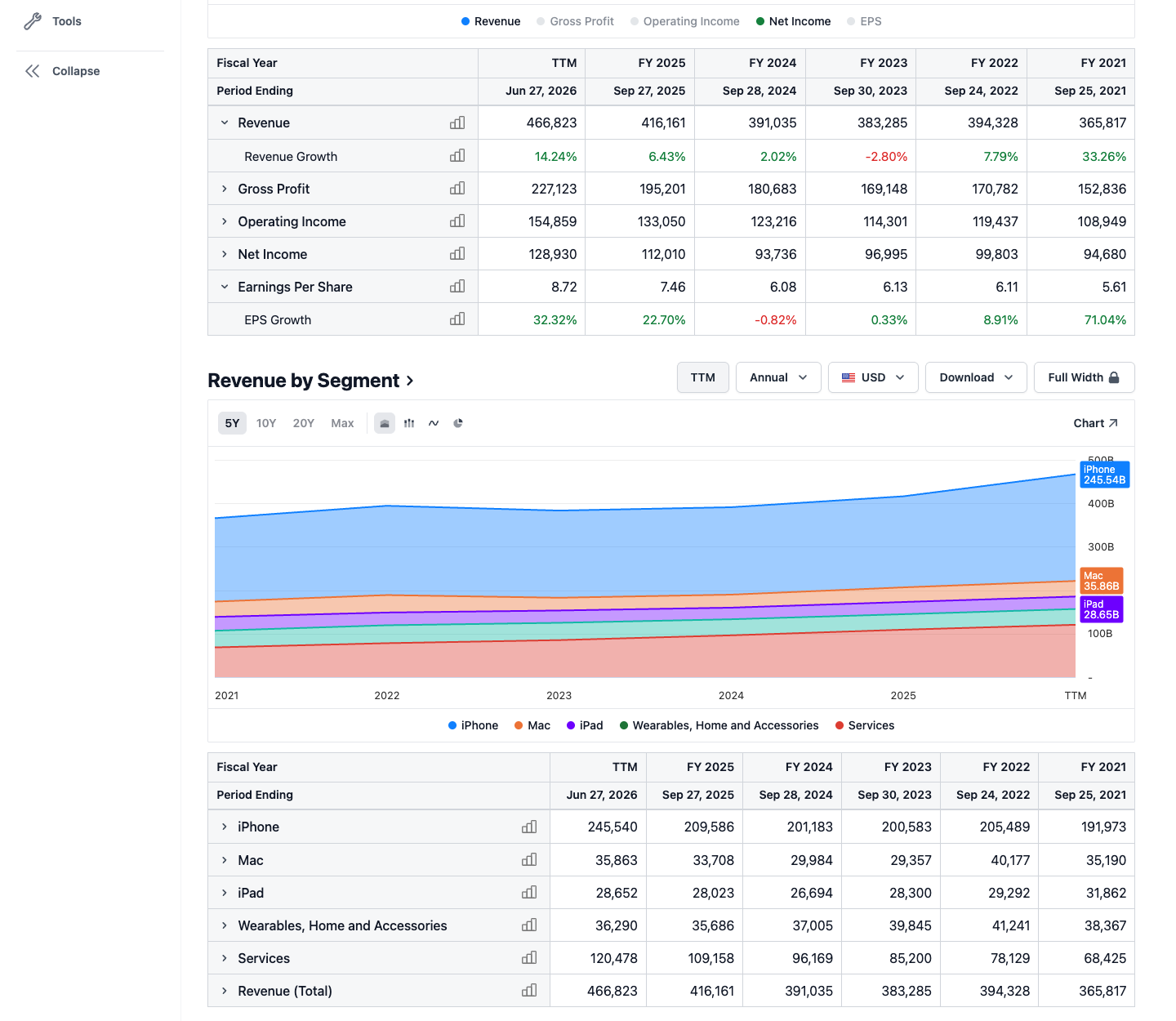
Notice the years lined up side by side: the trend matters more than any single year.
A healthy pattern shows sales and profit mostly rising. Now picture the mirror image: three straight years of shrinking sales, profit halved twice. That company screens “cheap” all the way down, and the screen never warns you.
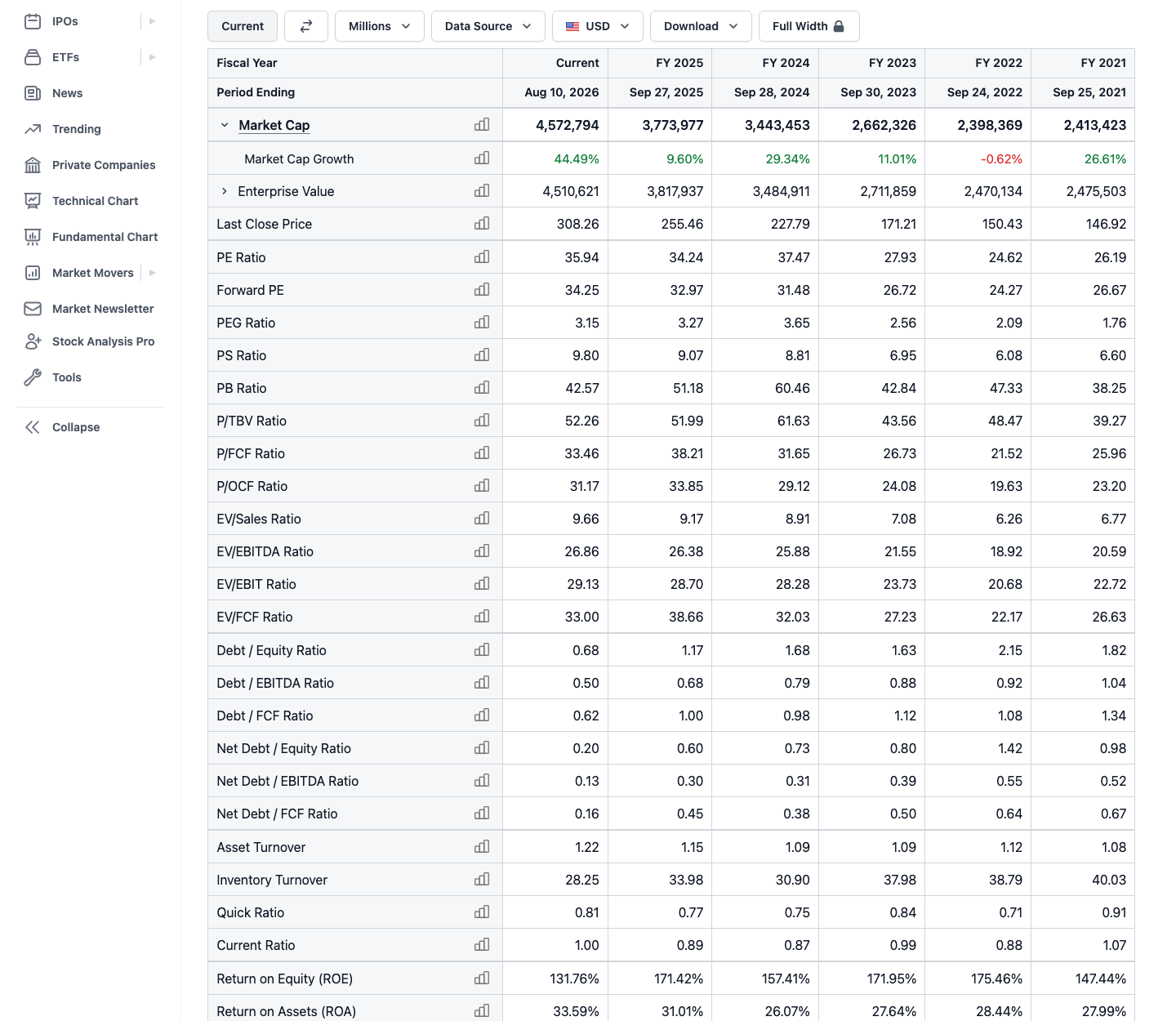
Notice how a ratios table gives you one clean number, with no hint of the story behind it.
And here is the part a screener never shows you at all:
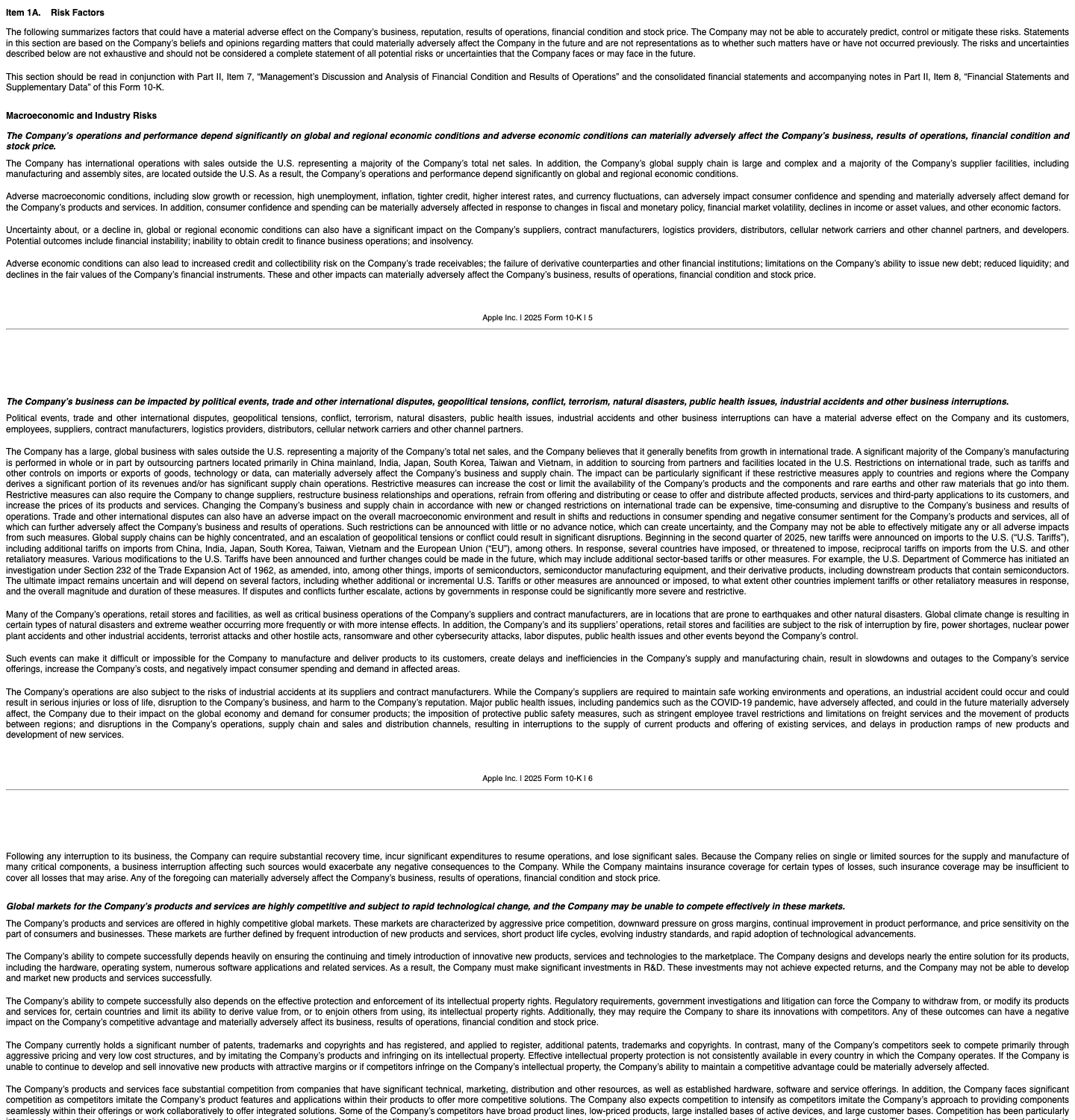
Notice how many pages of “what could go wrong” sit inside the company’s own report, unread by any filter.
One more honest point: screens also miss good companies for silly reasons, like one bad quarter. A screen generates questions. It never generates answers.
The opposite trap: a screen that only follows the money
The four traps above live in a fundamentals screen, which reads the business on paper. The other one-question screen has the mirror-image hole: follow only money moving in, and you learn nothing about the business; money does not only chase good ones. The Microcap Minute’s own weekly screen asks which companies are gaining ground on the S&P 500; when a quality checklist was run over one recent list of ten survivors, only three passed. One was earning a negative return on equity; another was issuing new shares as money flowed in.
So each one-question screen has a hole. A fundamentals-only screen can hand you a fine business nobody cares about, unloved for years. A money-only screen can hand you a weak business mid-party. The house answer is to ask both, in order: money moving now first, then the business check.
Try it yourself
On the StockAnalysis screener, filter US stocks with a P/E under 8. Pick any three results. For each one, open its financials page and check whether revenue rose or fell across the last three years. Write “cheap and growing” or “cheap and shrinking” next to each name. You are classifying, not shopping.
Key takeaways
- Cheap is a price and good is a business; the two often travel in opposite directions.
- A P/E built on falling, borrowed, or one-time profit is a trap, not a bargain.
- Cyclical companies look cheapest at the very top of their cycle.
- When a screener number and a filing disagree, believe the filing.
- A screen that only follows the money cannot see a weak business.
Read one real thing
Apple’s 10-K: scroll to Item 1A, Risk Factors, and count them. The screener showed you one ratio; the company itself lists pages of worries.
Listen to this chapter
Read by Ritu, a synthetic voice from Sarvam AI