Item 1A Risk Factors: what keeps management awake
What you will learn
- What a risk factor is, and why the SEC makes companies list them
- The difference between generic risks and company-specific risks
- What actually worries Apple’s management, from its own filing
- Why a listed risk is a possibility, not a prediction
Before a big match, every cricket captain carries a private worry list: the pitch might turn on day three, the star bowler’s shoulder is sore, rain is forecast after lunch. Item 1A of a 10-K is the company’s worry list, written down for every shareholder to read.
A risk factor is something that could seriously hurt the business, its profits or its share price. The SEC requires companies to list the big ones, roughly in order of importance, each with a bold heading. Apple listed its first one under “Macroeconomic and Industry Risks” and went on for about twelve pages.
The one skill this section needs
Many risks are boilerplate: standard cautionary text that lawyers add to every filing. Every company on earth says “weak economic conditions could reduce demand”. True, and useless. The skill is separating the generic risks from the specific ones, because the specific ones teach you how the company actually works.
Apple’s 2025 list, sorted that way:
- Generic: recessions, inflation, currency swings, natural disasters, pandemics, cyber attacks. Every large company writes these.
- Specific: partners primarily in Asia perform final assembly of substantially all of Apple’s hardware. A trade fight, an earthquake or a flood in the wrong place is not a theoretical problem for Apple.
- Specific: many components come from a single source. A custom chip might have exactly one supplier on the planet. If that supplier stumbles, there is no backup plan at short notice.
- Specific, and new: starting in the second quarter of 2025, new US tariffs were announced on imports from China, India, Vietnam and others. Apple says the final impact is uncertain. That is a risk being written while it happens.
- Specific: regulators in Europe are investigating App Store rules under the Digital Markets Act.
Here is why the specific ones matter. The iPhone is about half of Apple’s sales, $210 billion out of $416 billion in 2025 (about ₹18 lakh crore). So “we must keep introducing successful new products” is not filler for Apple. It is the whole game.
For variety, look at Nvidia: its 10-K warns that US government export rules restrict sales of its most advanced chips to China. That risk reads very specific because it had already cost Nvidia real sales. Lesson: when a risk is written in sharp detail, it has often already happened once.
One honest warning. Companies also use Item 1A as legal armour. If something goes wrong later, they can point to the page and say “we told you”. So read it as a map of worries, not a list of predictions.
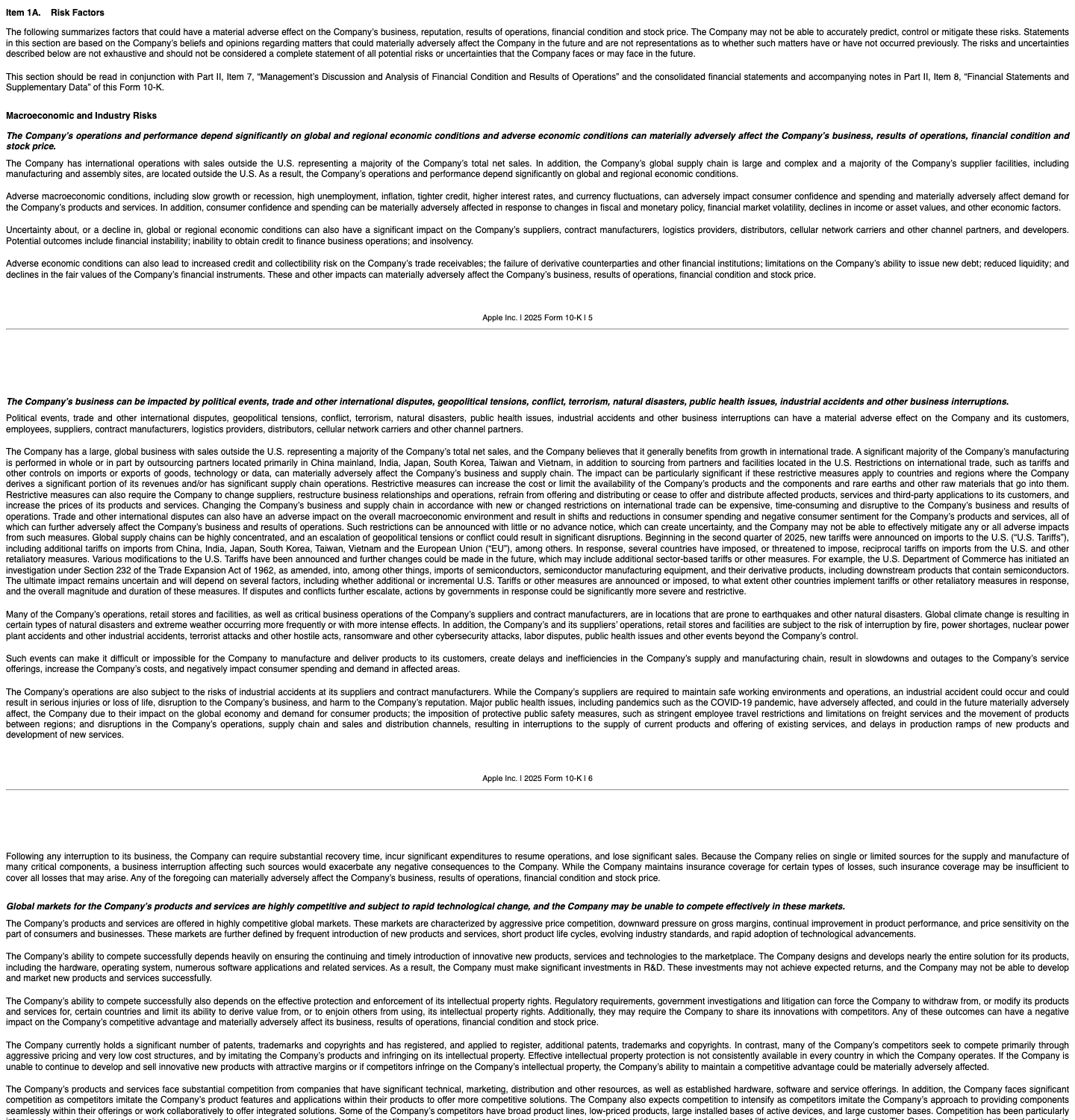
Notice the bold headings, one per risk. You can scan them like newspaper headlines before reading any paragraph.
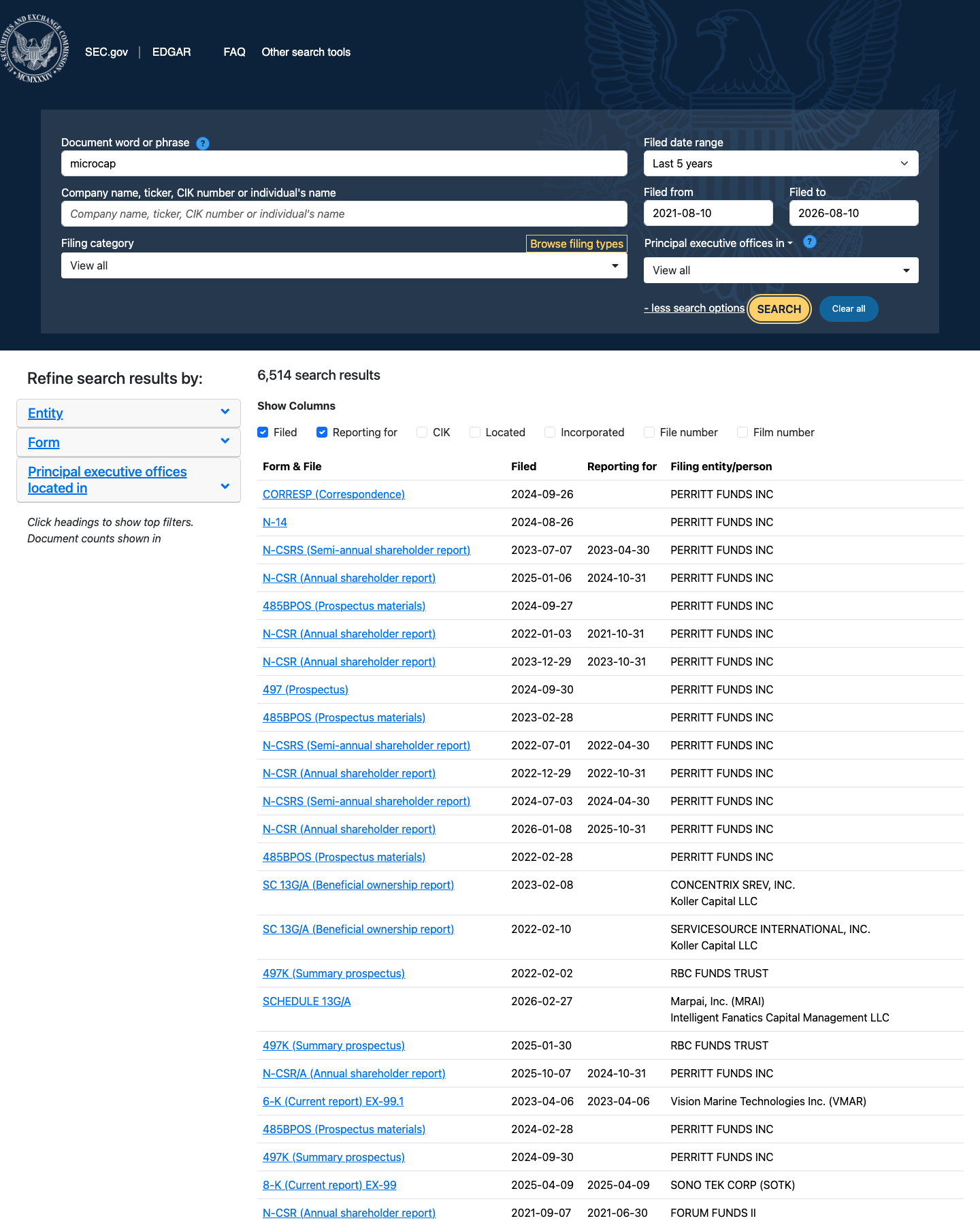
EDGAR’s full-text search lets you search a phrase across every company’s filings. Notice how a phrase like “single or limited sources” turns up the same supply worry in company after company.
Try it yourself
Open Item 1A in Apple’s 10-K and copy ten bold risk headings into two columns: “could happen to any company” and “specific to Apple”. Which column is longer? For the specific ones, ask: what fact about Apple’s business makes this risk real?
Key takeaways
- Item 1A is the company’s own worry list, required by the SEC, with the biggest risks near the top.
- Scan the bold headings first; read fully only the risks specific to this company.
- Specific risks (one factory region, one supplier, one star product) matter far more than generic ones (recession, weather).
- Companies write risks partly as legal protection. A listed risk is a possibility, not a prophecy.
Read one real thing: Item 1A of Apple’s 2025 10-K. Notice how the list opens with the world economy, then turns quickly to Apple’s own supply chain.
Listen to this chapter
Read by Ritu, a synthetic voice from Sarvam AI