Spin-offs: when a company splits and some sellers must sell
What you will learn
- What a spin-off is, in plain words
- Why some shareholders must sell the new company whether they like it or not
- The filing that describes the new company: Form 10
- Why spin-offs can be mispriced, and why some are just rubbish dumps
Imagine your school grows so large that it splits into two schools. Your old roll number becomes two roll numbers: you now belong to both. Nothing was sold, no money changed hands, but the pieces are separate from today.
A spin-off is the company version of that. A big company separates one part of itself into a new, independent company and hands its shares to existing owners, free. If you owned the parent on the right date, you wake up owning two companies.
Why give away part of a company? Because the parts are often different businesses that distract each other. Separate, each gets its own boss, its own books, and a clean valuation.
Why the price can wobble
Here is the interesting part. Many owners of the parent are giant funds with strict rules: only very large companies, or only companies on a particular index (a fixed list of stocks used to measure the market). The new spun-off company is usually small and not on their list, so their rules force them to sell it, whatever the price.
Forced sellers are not thoughtful sellers. When many of them sell at once, the new company’s price can sag below what the business is worth. Joel Greenblatt’s famous book You Can Be a Stock Market Genius is built on exactly this: look where people must sell, not where they choose to sell.
A worked example: GE and GE HealthCare
General Electric, the old American industrial giant, decided it was really three companies wearing one coat. In January 2023 it spun off its medical business as GE HealthCare: every GE shareholder received one new share for every three GE shares held. No payment, no forms: the shares simply arrived. Funds allowed to hold only industrial companies now owned a hospital-equipment company, and many had to sell.
The document: Form 10
Before the split, the new company must file a Form 10 with the SEC. It reads like a mini 10-K: what the business does, its risks, and its finances, often with years of history. You can find these with EDGAR’s full-text search.
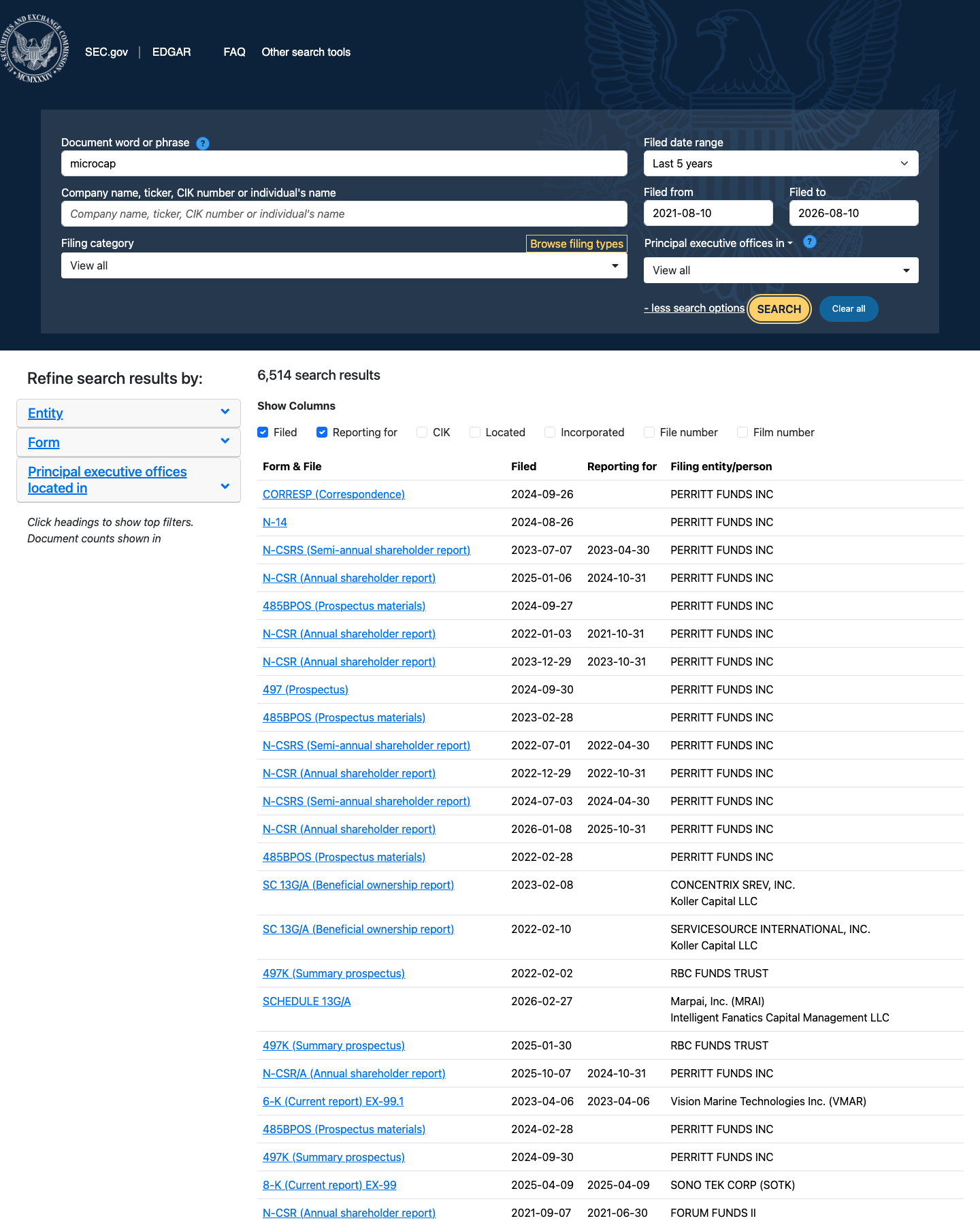 Notice the query box: typing “spin-off” or “separation” here surfaces Form 10 filings from across the whole market.
Read a Form 10 like a detective. One question above all: who keeps the debt? Some parents load the spin-off with loans and wave goodbye. Those spin-offs struggle, and some fail. Not every spin-off is a bargain; some are a rubbish dump with a stock ticker.
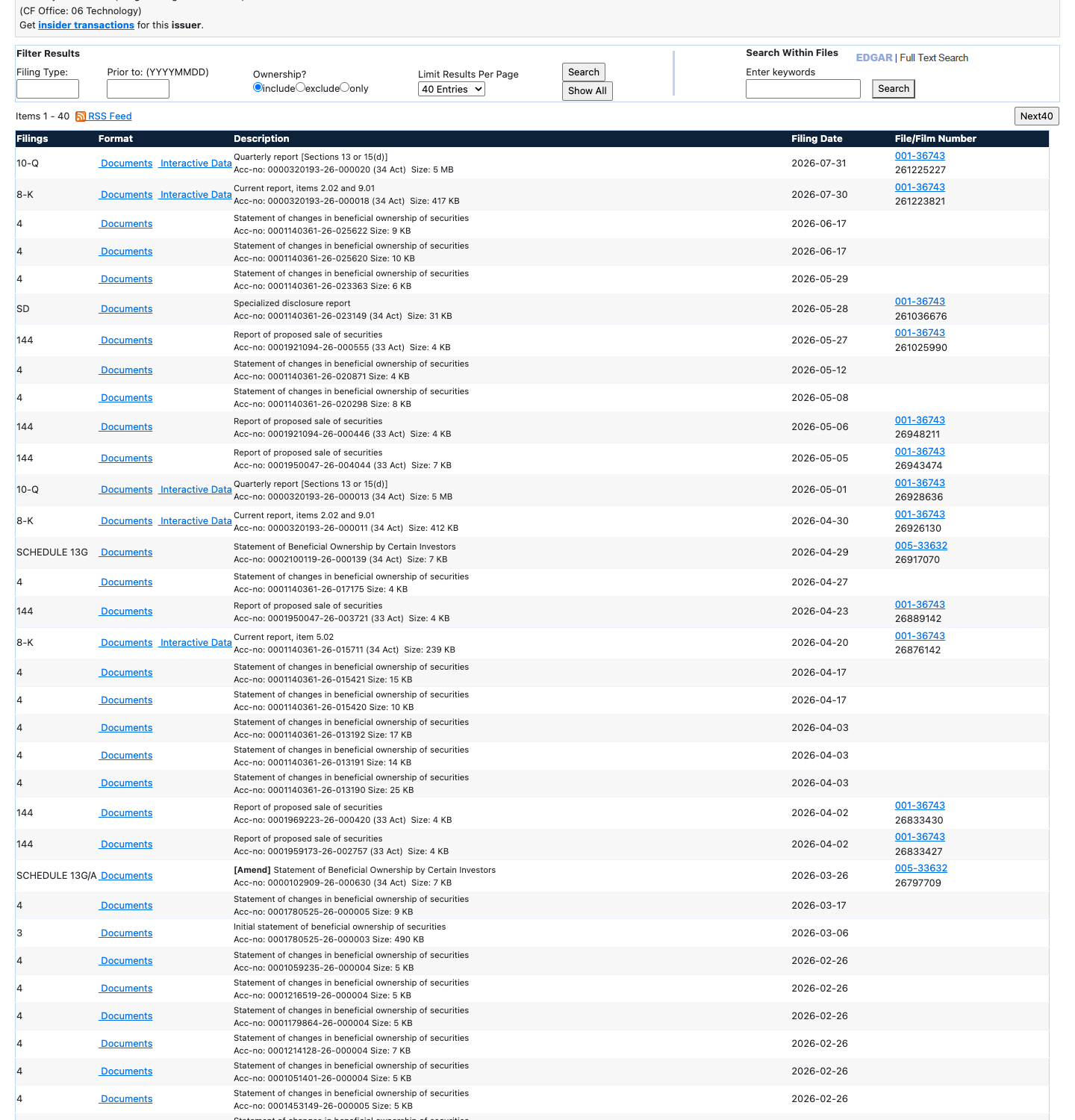 Notice the dates and form types: a spin-off’s Form 10 would sit in a list exactly like this one.
What the numbers say, honestly
The old studies made spin-offs sound like free money. The Penn State study Greenblatt quoted found spin-offs beating the market by about 10% a year in their first three years. A 2004 study of 311 spin-offs found them about 26% ahead of the market after three years, peaking around month 21.
Then everyone read those studies. A fund with the ticker CSD robotically bought every large American spin-off: over the last ten years it made about 13% a year, while the plain S&P 500 index made 15.3%. Buying every spin-off blindly would have left you behind.
What remains is the forced-selling window. When an S&P 500 company spins off a business too small for the index, the new shares enter the index at a zero price and leave after about a day of trading, unless the committee keeps the company. Index funds must sell almost at once. That small window is where mispricing still hides.
Try it yourself (10 minutes): open EDGAR’s full-text search at sec.gov/edgar/search/ and type “spin-off”. Open one Form 10 from the results. Find two things: how much debt the new company carries, and the ratio of new shares to old shares. That is the whole first inspection, free.
Key takeaways
- A spin-off gives existing owners free shares in a newly separate piece of the company.
- Big funds with strict rules often must sell the new shares, which can push the price too low.
- Old studies showed huge spin-off gains, but the buy-every-spin-off fund has lagged the plain index for a decade.
- Form 10 is the spin-off’s biography: read it, especially the debt.
- Some spin-offs are bargains, some are rubbish dumps. The filing tells you which.
Read one real thing: GE HealthCare’s Form 10 filings on EDGAR. Notice the amendments (10-12B/A): the document kept changing as the split was negotiated.
Listen to this chapter
Read by Ritu, a synthetic voice from Sarvam AI